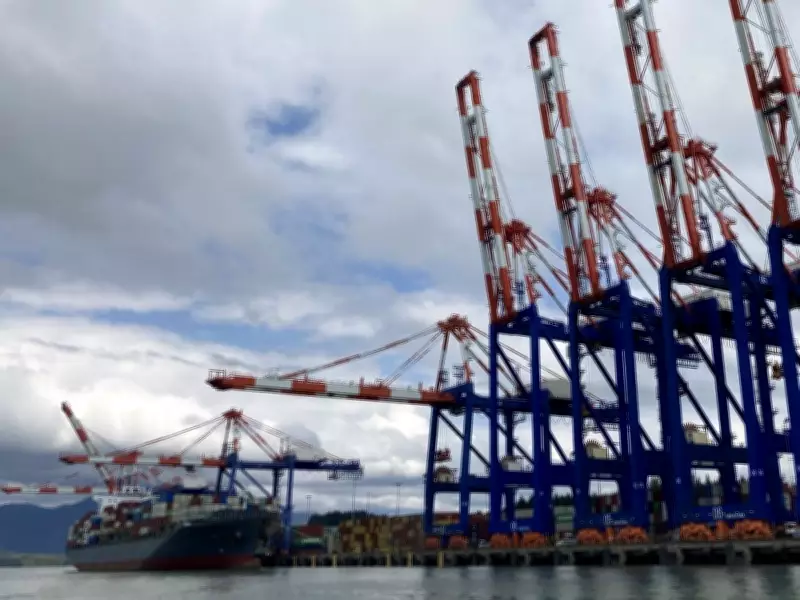
Legal Battle Over Propane Terminal Threatens Canada's Energy Export Strategy
A significant legal dispute surrounding a major propane export terminal currently under construction at the Port of Prince Rupert in British Columbia could have profound implications for future energy projects in the region, potentially complicating Canada's broader energy export ambitions according to legal experts and industry observers.
Project Details and Export Capacity
The terminal represents a joint venture between Calgary-based AltaGas Ltd. and Netherlands-based Royal Vopak. Once operational, this facility would substantially boost Canada's export capabilities, adding capacity equivalent to approximately 20 percent of the country's current propane and butane exports. The project, known as REEF, is already approximately 70 percent complete and is scheduled to open later this year if construction proceeds as planned.
Core Legal Issues and Indigenous Consultation
The legal conflict centers on two critical issues: Indigenous consultation processes and exclusive cargo rights at the federally governed Port of Prince Rupert. After initially providing consent for construction on its traditional territory, the Metlakatla First Nation has withdrawn its support for the terminal project. In January, the British Columbia Supreme Court ruled that the Nation's lawsuit against the Prince Rupert Port Authority could proceed to trial.

The legal claim alleges that the port authority failed to properly disclose a 2015 agreement that granted exclusive propane export rights to Vopak. The Metlakatla First Nation contends that this arrangement negatively impacts their economic interests and represents a failure in the consultation process required for such developments.
Broader Implications for Energy Export Strategy
This legal battle unfolds at a crucial moment for Canada's energy policy. The federal government is actively pursuing expanded energy exports to Asian markets while seeking to reduce traditional reliance on United States markets. Liquefied petroleum gases including propane and butane have emerged as key components of this strategic shift.
Prime Minister Mark Carney and Indian Prime Minister Narendra Modi recently signed agreements aimed at deepening energy trade relations between the two countries, including advancing plans to finalize a long-term liquefied petroleum gas supply arrangement. The AltaGas propane terminal, representing a $1.35-billion investment, is widely viewed as critical infrastructure supporting this export diversification strategy.
Potential Consequences and Future Projects
Industry analysts suggest that while the first phase of the terminal project is unlikely to be directly impacted by the ongoing legal dispute, the conflict could complicate future expansions of the facility. More significantly, the legal proceedings may establish important precedents affecting how the federal government handles Indigenous consultations and manages competing interests in other proposed export projects at Prince Rupert.
These potentially affected projects include the Ksi Lisims LNG development and a potential Alberta-backed oil pipeline. The legal questions raised in this case could influence how similar energy infrastructure projects proceed throughout British Columbia and potentially across Canada.
Expert Analysis and Legal Questions
Heather Exner-Pirot, a senior fellow and director of energy, natural resources and environment at the Macdonald-Laurier Institute, highlighted the novel legal questions at stake. "It's an interesting legal question: would a judge broaden the duty to consult and accommodate to include economic dealings?" she noted.
Exner-Pirot continued, "It would certainly be novel, and it would have far-reaching consequences that I think would be politically very unpopular in British Columbia at this moment, if the duty to consult were interpreted as Indigenous nations are entitled to hear about commercial business dealings between third parties."

Corporate Implications and Investor Concerns
AltaGas is scheduled to report fourth-quarter financial results later this week, and company executives are likely to face questions from analysts and investors regarding the terminal dispute and potential fallout from January's court ruling. Of particular interest will be the status of a $110-million expansion approved last fall and how the legal proceedings might affect the company's strategic plans and financial projections.
The outcome of this legal battle could establish important precedents regarding Indigenous consultation requirements in energy projects while potentially reshaping how Canada pursues its energy export ambitions in increasingly competitive global markets.