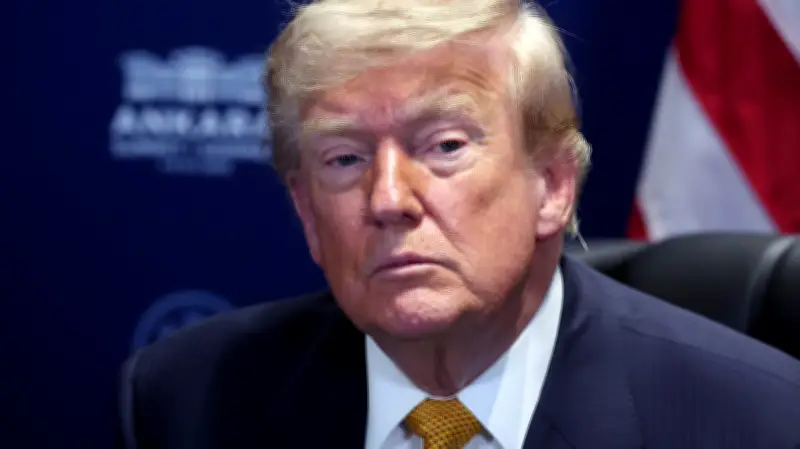
Oil prices surged more than 5% on Wednesday, reaching a two-week high after U.S. President Donald Trump declared the memorandum of understanding to end the conflict with Iran was “over,” reigniting fears of disruptions to Middle East oil supplies.
Brent crude futures gained $3.82, or 5.15%, hitting $77.98 a barrel at 0832 GMT, while U.S. West Texas Intermediate crude climbed $3.70, or 5.25%, to $74.14 a barrel. Both benchmarks are at their highest levels since June 23.
Trump's Statement and Market Reaction
Speaking ahead of a NATO summit in Ankara, Trump said the interim pact to end the war that the U.S. and Israel launched against Iran in February was “over,” adding he did not want to engage with Tehran. “To me, I think it's over. I don't want to deal with them anymore; they're scum,” the U.S. president said, according to Sky News.

The comments came after the U.S. revoked the general license authorizing the sale of Iranian crude, which had already driven both benchmarks up about 3% on Tuesday.
Analyst Insights on Price Outlook
“The latest developments have effectively thrown the future of the 60-day negotiation process into doubt,” said Bjarne Schieldrop, chief commodities analyst at SEB. “In my view, a price closer to $80 a barrel is more consistent with current market fundamentals than $70,” he added.
PVM analyst Tamas Varga noted that “four oil and gas tankers have reportedly either decided not to transit the strait or been forced to turn around after Iran declared that the only safe shipping route through the Strait of Hormuz is the one designated by Tehran.”
Military Escalation and Strait of Hormuz Concerns
The U.S. airstrikes were in response to Iranian attacks on three commercial vessels transiting the Strait of Hormuz, U.S. Central Command said on Tuesday. Iran’s Revolutionary Guards then said they targeted U.S. military sites in Bahrain and Kuwait early on Wednesday.
Iran did not take responsibility for the vessel attacks, but Qatar blamed Iran for them, including one on a Qatari liquefied natural gas tanker, which reported being struck by a drone that caused a fire in its engine room. The attacks renewed concerns about tanker traffic through the Strait of Hormuz, which carried cargoes equal to about one-fifth of global energy supply before the war began in late February.
Inventory Drawdowns and Market Positioning
After the U.S. and Iran signed their truce agreement last month, oil prices tumbled back to pre-war levels, and traders amassed large short positions in oil futures, betting that prices would fall further. Expectations of a wave of pent-up Middle East supply coming onto the market caused the price declines.
Since the start of the conflict, nations have drawn down their inventories to make up for the supply shortfall. U.S. crude oil inventories fell again last week, market sources said on Tuesday, citing data from the American Petroleum Institute. Analysts polled by Reuters had expected crude stockpiles to decline by about 2.4 million barrels in the week ended July 3.