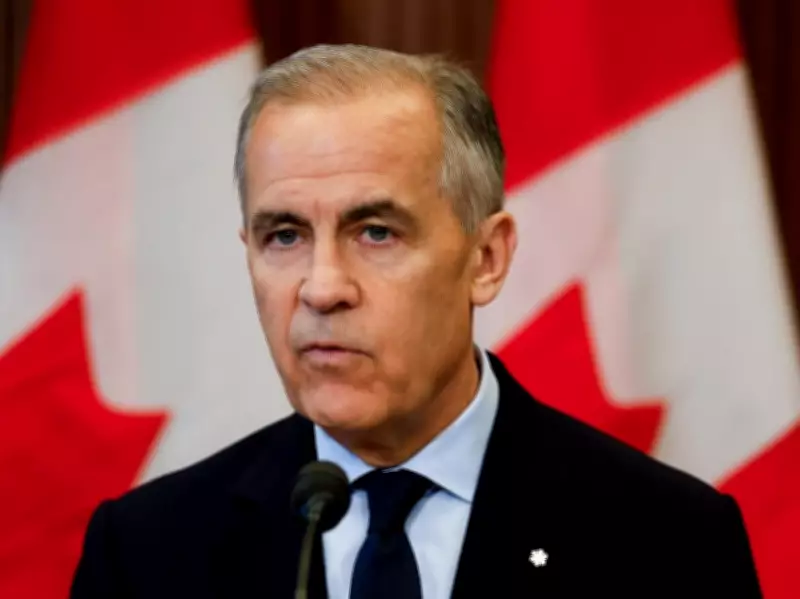
Prime Minister Mark Carney did not, despite media claims to the contrary, announce a national electricity strategy on Thursday. He announced the federal government will consult with the provinces and other interest groups over the next few months to develop a strategy.
There cannot be a national strategy without the provinces because they are responsible for the generation, transmission and distribution of electricity within their own borders. The feds are responsible for the interprovincial and international transmission of electricity, nuclear energy and environmental regulations.
Carney said his goal is to double Canada's electricity generation by 2050 to meet rising demand, claiming this could deliver $15 billion in energy savings and lower energy costs for seven in 10 Canadian households, while creating more than 130,000 high-skilled jobs. That sounds pie in the sky.

The real concern, as Carney warned, is that if we get it wrong Canadians will pay higher electricity bills and experience blackouts. One way to get it wrong will be to sacrifice rational electricity policy in the name of achieving net zero greenhouse gas emissions in the electricity sector by 2035 and nationally by 2050 — both unrealistic goals of the previous Justin Trudeau government which Carney should scrap.
Canada already has some of the cleanest electricity generation in the world, with 80% coming from non-emitting sources. The electricity sector today contributes a mere 7.2% of Canada's annual emissions compared to 15.5% in 1990, dropping by almost half to 49.6 million tonnes annually today, compared to 94.4 million tonnes in 1990. It is a huge success story. If every other sector of the economy was as successful at reducing emissions, Canada would have achieved net zero years ago.
But to keep the system operating efficiently will require the use of natural gas — the cleanest fossil fuel, which burns at half the carbon-dioxide intensity of coal. Carney's acknowledgement of this reality Thursday is controversial in Canada only because environmental radicals, some within Carney's government, oppose the use of natural gas. That is absurd.
The real challenges facing Canada's electricity sector are to upgrade aging infrastructure, and increase our capacity to transmit electricity both east and west and north and south, not to obsess over achieving net zero emissions in one of the world's cleanest electricity grids.