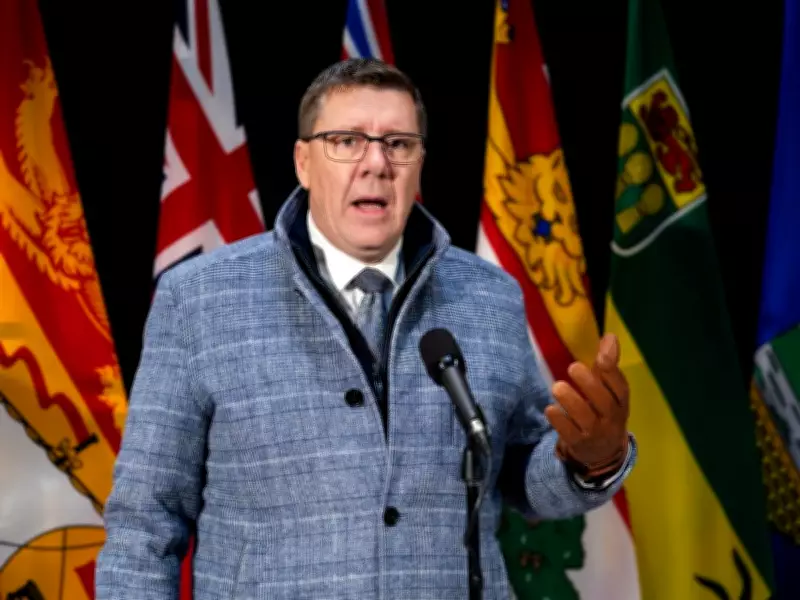
Saskatchewan Premier Scott Moe has declared that a "unified effort" emerged from Thursday's First Ministers Meeting in Ottawa, positioning his province as a key player in Canada's push to become a global energy superpower. Moe's comments came during a news conference in Saskatoon on Friday, where he expressed optimism about Saskatchewan's role in national resource development despite external challenges.
A Decade of Preparation Leads to Starting Line
"We've been in the starter blocks for a decade, and now the race is on," Moe stated, referencing what he described as a renewed federal commitment to advancing resource projects across the country. The premier emphasized that this momentum comes at a crucial time for Saskatchewan's economic future.
Regulatory Environment Sets Saskatchewan Apart
Moe specifically highlighted what he called Saskatchewan's unique regulatory advantages. "There's really a regulatory environment here that is unlike anywhere else in North America, and I don't say that without truly believing it," he told reporters. This framework, according to Moe, positions the province favorably for accelerated development of its natural resources.

Major Projects and Mineral Discoveries
The premier's statements followed the announcement of a significant alumina deposit discovery near Tisdale, Saskatchewan, which Canadian Energy Metals (CEM) plans to mine. Moe also referenced several other major developments in the province, including:
- Foran Mining's McIlvenna Bay copper and zinc mine, which is being fast-tracked through federal approval processes
- Recent expansions in uranium extraction and processing
- Growing helium and lithium development initiatives
"I'm excited about all that's happening in the province of Saskatchewan," Moe declared, noting that he planned to meet with federal Major Projects Office officials later on Friday to discuss these initiatives.
Navigating International Trade Challenges
Despite the positive developments, Moe acknowledged ongoing challenges in international relations. He referenced U.S. President Donald Trump's recent threats of 100 percent tariffs on all Canadian exports to the United States, which came in response to Canada's decision to allow 49,000 Chinese-made electric vehicles across its borders.
"Trump's tone should be taken seriously," Moe cautioned, while urging observers to "keep an eye on the broader goal" when considering messages from the White House. The premier had just returned from China, where reduced trade barriers on Canadian canola were announced—a development he celebrated as a victory for Saskatchewan farmers.
Provincial Unity Amid Differing Perspectives
Moe noted that the sense of unity at the First Ministers Meeting persisted despite growing separatist sentiment in neighboring Alberta and differing provincial perspectives on international trade. When asked about Ontario Premier Doug Ford's concerns about Canadian autoworkers competing with Chinese manufacturers, Moe suggested there might be opportunities for partnership between Canadian and Chinese automotive companies.
Middle Powers and Global Positioning
The premier also addressed Prime Minister Mark Carney's recent speech at the Economic World Forum, where Carney positioned Canada as leading a group of emerging middle powers. "Middle powers must act together because if you are not at the table, you are on the menu," Carney had stated on January 20.
While Moe distanced himself from discussions about changing world orders, he expressed confidence in Saskatchewan's ability to contribute significantly to Canada's economic future. "There was a sense of unity around the table," he concluded, suggesting that this collaborative spirit would benefit resource development initiatives across provincial boundaries.