LNG Canada's Kitimat Facility Flaring Gas at Alarming Rates
In a concerning development for British Columbia's energy sector, newly released documents reveal that LNG Canada has been flaring up to 15 times more gas than expected at its Kitimat facility. The revelations come from over 2,000 pages of documents obtained through freedom of information legislation, painting a troubling picture of operational challenges and delayed regulatory communication.
Community Concerns and Official Responses
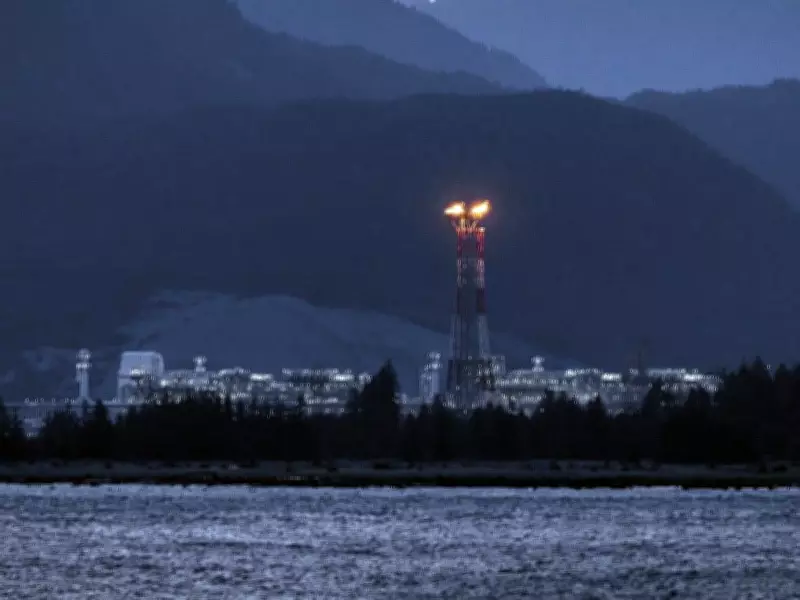
The issue first became apparent to Kitimat residents in fall 2024 when 90-metre-high flames lit up the night sky accompanied by a deep roaring sound that permeated the town. Residents expressed growing concerns about the excessive flaring, with many questioning the potential environmental and health impacts of the operation.
More than a year later, complaints escalated to the point where Kitimat District Council held a special meeting with Teresa Waddington, LNG Canada's deputy chief operating officer. During the meeting, councillor Terry Marleau pressed for answers about the flare stacks specifically, asking directly about potential issues with the equipment.

"We're reviewing the flare tips design," Waddington responded. "We are looking long term at what else could we do other than just reduce flaring in order to make sure that we get to a better place." She described the situation as "part of the learning curve of new equipment," acknowledging that while the technology achieves high levels of incineration resulting in lower greenhouse gas emissions overall, "it's not perfectly working."
Technical Challenges and Environmental Implications
The documents reveal that just a few kilometres from the nearest residential neighborhood, LNG Canada had been feeding gas into its flaring system at more than 15 times the typical amount to compensate for what was described as an "integrity issue." This dramatic increase in flaring volume represents a significant deviation from expected operational parameters.
Flaring serves as a necessary safety protocol in natural gas processing facilities. The process involves burning excess or waste gas produced during operations, with methane and other gases from the Kitimat facility being sent up a 122-metre-high metal tube where they meet a pilot flame and ignite. This converts raw gas into carbon dioxide, carbon monoxide, and water vapor, though additional gases such as nitrous oxide, sulfur dioxide, volatile organic compounds, and particulates are often released during the process.
When flare systems are not properly designed for their operating environment, significant problems can occur. The gas may fail to reach the pilot flame, potentially causing the flare to creep down the tube and melt critical infrastructure. The standard solution involves increasing pressure, gas volume, and flame size, but when gas is not fully combusted, visible black smoke appears—a concern raised by community members.
Regulatory Delays and Internal Discussions
The released documents show that LNG Canada officials were discussing flaring issues internally for approximately four months before informing the provincial energy regulator. During this period, both regulator and industry officials grappled with the technical challenges while community members and local politicians continued to ask questions about the excessive flaring.
Complaints from residents ranged from concerns about excessive noise to more serious worries about potential toxic emissions, black smoke, and particulate matter. The delayed communication with regulators raises questions about transparency and compliance protocols within the energy sector, particularly for major industrial operations with significant environmental footprints.
The situation at LNG Canada's Kitimat facility highlights the complex balance between energy development, environmental protection, and community relations in Canada's evolving energy landscape. As the facility continues its operations, stakeholders will be watching closely to see how the company addresses these flaring issues and implements long-term solutions to minimize environmental impacts while maintaining operational safety.