Lithium Argentina Announces Significant Resource Expansion at Argentine Operation
ZUG, Switzerland – Lithium Argentina AG, trading under the symbols TSX: LAR and NYSE: LAR, has unveiled a substantially updated mineral resource and reserve estimate for its Cauchari-Olaroz brine operation located in Argentina's Jujuy Province. This comprehensive assessment, completed with an effective date of December 31, 2025, marks a pivotal development for the company's strategic growth initiatives in the lithium sector.
Enhanced Resource Base Supports Ambitious Expansion Plans
The updated estimate, prepared by technical consultants Aquatec and Groundwater Insight, Inc., reveals a remarkable 42% increase in measured and indicated resources, now totaling 28.1 million tonnes of lithium carbonate equivalent. This substantial growth from the previous 19.9 million tonnes represents a significant enhancement to the company's asset portfolio. The average grade of these resources stands at 562 milligrams per liter of lithium, while inferred resources have more than doubled to 9.6 million tonnes at 567 milligrams per liter.
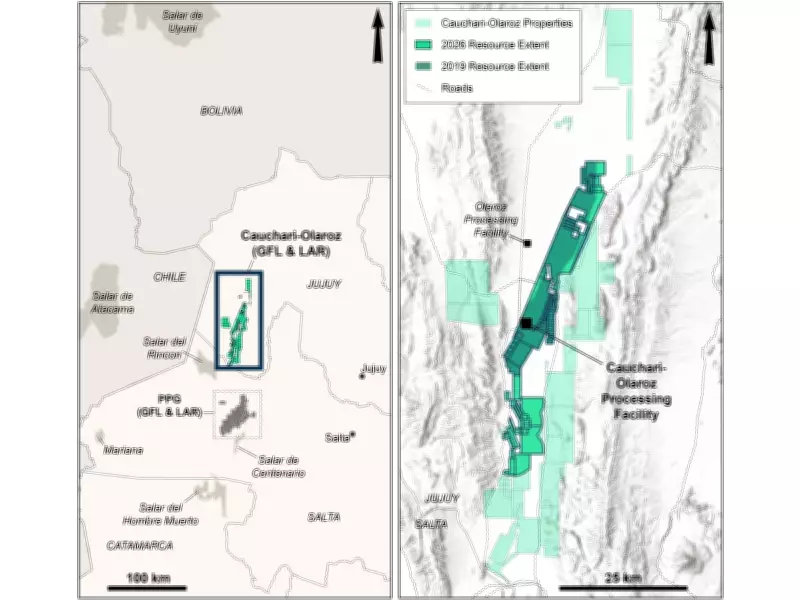
This expanded resource footprint incorporates extensive new drilling data that extends the operational area approximately 20 kilometers south of previous boundaries. The assessment also integrates production well sampling results and utilizes a sophisticated basin-wide hydrological model specifically designed to support the company's Stage 2 development strategy.

Strategic Development Timeline and Production Targets
The company plans to file a comprehensive technical report containing the updated estimate during March 2026. This documentation will provide detailed insights into the geological and operational characteristics of the expanded resource base. The reserve model has been carefully aligned with current Stage 1 production levels, confirming a 35-year operating period from 2026 through 2060, consistent with the original 40-year project life after accounting for existing brine inventory and production to date.
Stage 2 development represents a major strategic priority, targeting an additional production capacity of 45,000 tonnes of lithium carbonate equivalent annually. This expansion builds upon the established Stage 1 operating capacity of 40,000 tonnes per year. The company has already taken significant regulatory steps forward, having filed applications for Argentina's Incentive Regime for Large Investments (RIGI) and necessary environmental permits in December 2025 to support this increased production capacity.
Executive Leadership Perspective on Growth Strategy
Sam Pigott, Chief Executive Officer of Lithium Argentina, emphasized the strategic importance of this development: "With Cauchari-Olaroz Stage 1 continuing to perform exceptionally well – operating near capacity with costs under $6,000 per tonne – we are increasing our focus on our next phase of growth. The Updated Estimate at Cauchari-Olaroz, combined with Pozuelos-Pastos Grandes, provides one of the largest scale and highest-quality lithium brine portfolios globally."
Pigott further elaborated on the company's strategic approach: "Having the right resource base is the first step; moving forward, our priority is to de-risk our growth pipeline by securing the RIGI, obtaining necessary permits and finalizing the Stage 2 development plan that leverages Stage 1 while incorporating new technologies to drive further operational efficiencies."
The CEO outlined an ambitious vision for the company's future in Argentina's lithium sector: "Our vision is to build on this strong operational foundation targeting a combined capacity of over 200,000 tonnes per year of lithium carbonate equivalent across northern Argentina. As we work toward this goal, we remain firmly committed to a disciplined approach to capital allocation, ensuring that every step in our growth pipeline is directly tied to creating tangible, long-term shareholder value."
Results from the updated Stage 2 development plan are anticipated in mid-2026, providing further clarity on the timeline and specific implementation strategies for this significant expansion of lithium production capacity in one of the world's most promising lithium regions.