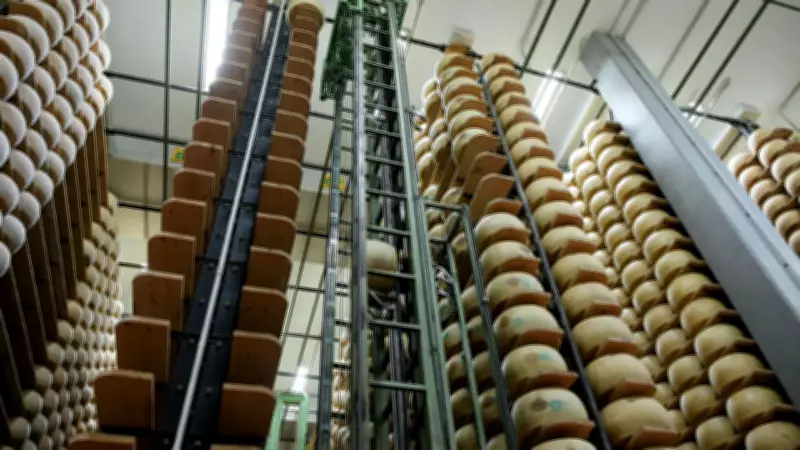
In a unique blend of gastronomy and finance, Italy's Credem Bank operates a secret 'cheese bank' where wheels of Parmigiano Reggiano are stored as collateral, effectively turning the renowned cheese into financial gold. This innovative practice allows producers to secure loans against their aging cheese, providing liquidity while the cheese matures.
How the Cheese Bank Works
Credem Bank, based in Reggio Emilia, has specialized in lending against Parmigiano Reggiano since the 1950s. Producers deposit their cheese wheels in climate-controlled warehouses, where they are inspected and valued. The bank then offers loans of up to 70-80% of the cheese's market value, with interest rates comparable to traditional business loans.
The Aging Process
Parmigiano Reggiano must age for a minimum of 12 months, but many wheels are aged for 24, 36, or even 48 months to develop richer flavors. During this time, producers need cash flow to cover production costs. The cheese bank provides a solution by unlocking the value of the aging cheese.

Economic Impact
This system supports thousands of small dairy farmers in the Emilia-Romagna region, helping them maintain operations without selling their cheese prematurely. It also stabilizes the market by ensuring a steady supply of aged cheese. The bank currently holds over 400,000 wheels, worth an estimated €300 million.
Quality Control
Each wheel is tested for quality and authenticity. Only cheese that meets strict standards is accepted, ensuring that the bank's collateral retains its value. This rigorous process protects both the bank and the producers.
The cheese bank is a testament to Italy's innovative approach to combining tradition with modern finance. It not only preserves a centuries-old culinary heritage but also provides a sustainable economic model for artisanal food producers.