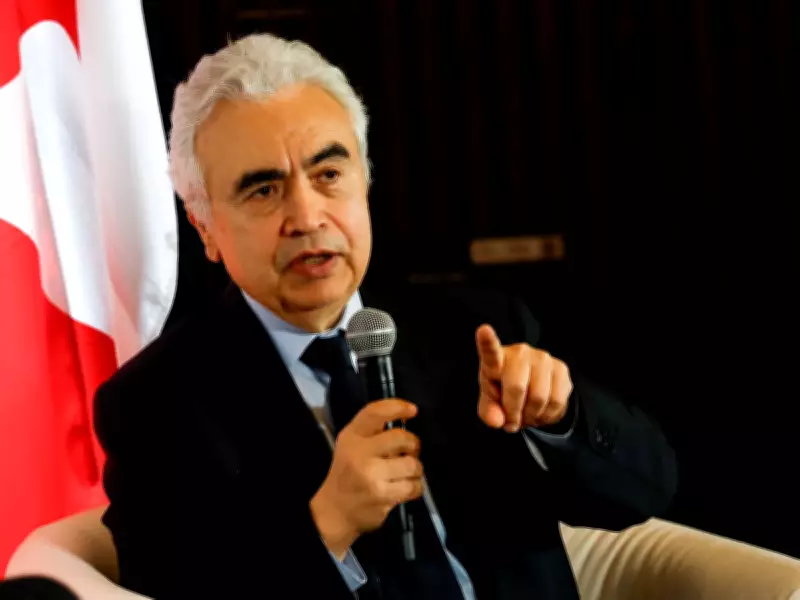
The head of the International Energy Agency (IEA) is urging Canada to accelerate the development and export of its energy resources, cautioning that favorable market conditions will not last indefinitely.
Speaking at a policy conference in Toronto, IEA Executive Director Fatih Birol emphasized that in the aftermath of the Iran war, countries are placing a premium on energy security. "The most important resource, or card, that Canada has today is trust," Birol said, noting that buyers are now prioritizing reliability over price.
A Golden Opportunity
Birol acknowledged Canada's international reputation for lengthy project timelines, partly due to multiple levels of government. "Canada doesn't have the luxury to be slow," he warned, highlighting a convergence of factors creating a "golden opportunity" for the country. "The cost of missing this train will be incredible," he added.

The world is losing 14 million barrels per day of oil due to the conflict in Iran, and production recovery will be gradual. The IEA has already coordinated a release of 400 million barrels from member reserves in March, with further action possible.
Standards Must Remain High
Birol stressed that accelerating projects should not compromise environmental or human rights standards. "I wish there were a few more Canadas in the world," he said, "so that we can have a much more reliable and sustainable global energy system."
When asked about his advice to the Canadian government on oil and gas, Birol replied: "They have to develop those resources, but more importantly they have to make sure that they have new export destinations." He expressed confidence that Prime Minister Mark Carney understands the urgency.
Industry and Regulatory Challenges
Birol's remarks follow comments from Cenovus Energy CEO Jon McKenzie, who noted that higher costs for new oil sands projects require looser environmental rules to be economically viable.
Canada has long struggled to attract capital compared to peer economies. Bank of Canada Governor Tiff Macklem told a Senate committee that international investors are deterred by lengthy regulatory approvals. "What is holding them back has been very long regulatory approvals," Macklem said, adding that streamlining processes could "unleash greater Canadian access to global capital."
Transport Minister Steven MacKinnon indicated that the government is working on speeding up regulatory processes for major projects, potentially through new legislation.