Honda has officially cancelled its planned $15-billion electric vehicle and battery plant expansion near Alliston, Ontario. The decision marks a significant shift in the automaker's North American strategy, but there is a silver lining: no government money has been handed over despite a promise of up to $5 billion in subsidies when the project was announced two years ago.
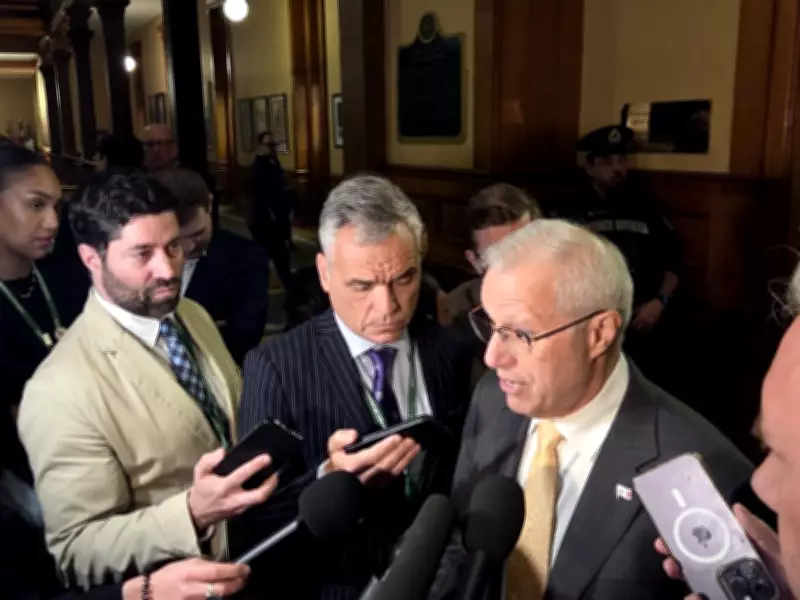
Ontario Economic Development Minister Vic Fedeli confirmed on Wednesday that no public funds had been released to Honda. “There is no money that has been released to Honda whatsoever, period,” Fedeli stated when questioned about the project's cancellation.
Project Background and Government Promises
The initial announcement on April 25, 2024, touted a $15-billion investment from Honda for a new electric vehicle assembly line and a battery plant in Alliston. The federal government pledged up to $2.5 billion in production tax credits, while the provincial government committed up to another $2.5 billion in support. However, the project never advanced to the point where those funds were disbursed.

Political Reactions and Blame Game
On Parliament Hill, Prime Minister Mark Carney responded to the news by blaming U.S. President Donald Trump and his tariffs. “There are challenges with the U.S. tariffs, unjustified tariffs in the auto sector. We continue to work with companies in the sector, helping them reposition, reinvest, and supporting workers there,” Carney said.
However, critics argue that tariffs are not the real culprit. The decision to scrap the Alliston plant appears to be driven by weak consumer demand for electric vehicles, a trend exacerbated by policy changes in the United States.
U.S. Policy Shifts and Market Impact
The Joe Biden administration had previously offered consumers up to $7,500 per vehicle to purchase EVs and implemented tailpipe emissions standards designed to push more consumers toward electric vehicles. After his election, President Trump eliminated both the consumer subsidy and the tailpipe emissions regulations. He also revoked California's authority to require all new vehicles to be zero-emission by 2035.
“I'm all for electric. If you want to buy electric, you can buy electric,” Trump said in June 2025 when repealing California's mandate. “You should be given the option. Buy the electric car. Buy a gasoline-powered car. Buy a hybrid.”
These moves significantly weakened the EV market across North America.
Plummeting EV Sales
Electric vehicle sales had been climbing in the U.S. and Canada, but they plummeted once subsidies were removed. In the U.S., battery electric vehicles made up 10% of new car sales just before the expiration of the federal subsidy but dropped to about 5% afterward. A similar trend occurred in Canada: in September 2024, 30,318 zero-emission vehicles were sold, representing 18% of all new cars that month. By February 2025, EV sales had fallen to just 8,578 units, or 6.8% of the market.
The North American EV market currently cannot sustain itself without subsidies. This reality is further complicated by Prime Minister Carney's new trade deal with China, which could allow up to 49,000 Chinese-made electric vehicles into Canada. China heavily subsidizes its EV manufacturing, particularly for export, creating additional competition for domestic producers.
Lack of New Auto Investments in Canada
While Honda's decision is not directly tied to Trump's tariffs, the broader lack of new auto investment in Canada is a direct consequence of trade uncertainty. Honda is still moving forward with some EV production, including a $1-billion investment in Ohio to produce electric, hybrid, and gas-powered vehicles at the same plant. Other automakers such as Toyota, Hyundai, Ford, Stellantis, and GM have also announced major investments in U.S. production over the past year.
Until the tariff uncertainty is resolved, Canada is unlikely to see significant new auto investments. This underscores the urgency for Prime Minister Carney to negotiate a deal with the U.S. rather than delaying. Critics note that Carney appears more focused on strengthening ties with Europe, which is not a major market for Canadian cars, while risking a rupture with the United States.