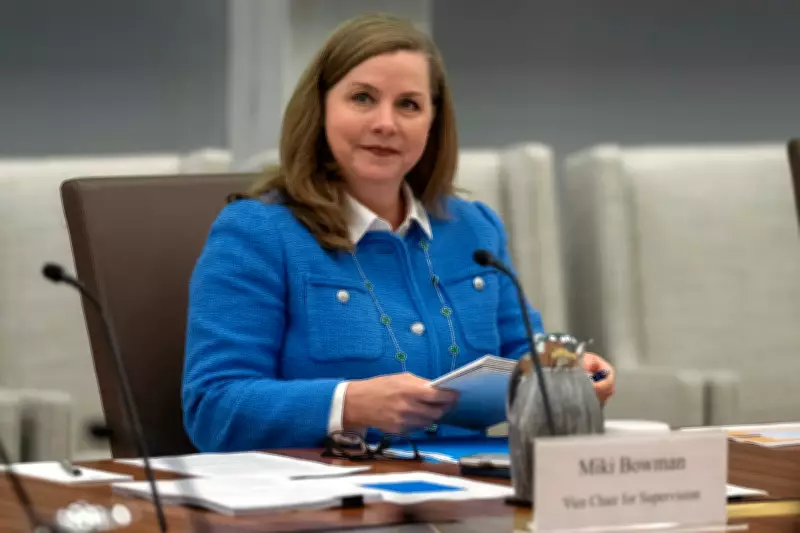
Federal Reserve Governor Michelle Bowman said on Thursday that an extended energy price shock could force the U.S. central bank to reconsider its monetary policy stance, highlighting the potential for persistent inflation pressures.
Bowman's Remarks on Energy and Inflation
Speaking at a conference in Washington, Bowman noted that while the Fed has made progress in curbing inflation, disruptions in energy markets pose a significant upside risk. "If energy prices remain elevated for an extended period, it could have broader implications for the inflation outlook and, consequently, for monetary policy," she stated.
Bowman, known for her hawkish views, emphasized that the Fed must remain vigilant. She pointed to geopolitical tensions and supply constraints as factors that could keep energy costs high. "We cannot afford to be complacent. The persistence of energy shocks could require a policy response," she added.

Market Reactions
Financial markets showed little immediate reaction to Bowman's comments, as investors had already priced in a cautious Fed stance. However, analysts noted that her remarks underscore the delicate balance the central bank must strike between controlling inflation and supporting economic growth.
"Bowman's message is clear: the Fed is not done fighting inflation, and energy prices are a key variable," said Sarah Johnson, chief economist at Global Insights. "If oil and gas prices stay high, we could see a delay in rate cuts."
Broader Economic Context
The U.S. economy has shown resilience despite elevated interest rates, but energy costs remain a wild card. Recent data showed consumer prices rising 3.4% year-over-year, still above the Fed's 2% target. Bowman reiterated that the central bank will rely on incoming data to guide its decisions, emphasizing that "the path forward is data-dependent."
- Energy prices have surged due to OPEC+ production cuts and geopolitical instability.
- The Fed has held interest rates steady at 5.25%-5.50% since September 2025.
- Market expectations for a rate cut in 2026 have been pushed back amid persistent inflation.
Policy Implications
Bowman's comments align with other Fed officials who have urged caution. While some policymakers have signaled that rate cuts could begin later this year, Bowman's warning suggests that an energy-driven inflation spike could derail those plans. "We need to see sustained evidence that inflation is moving sustainably toward 2% before easing policy," she said.
The Fed's next meeting is scheduled for June 16-17, 2026, where the committee will update its economic projections. Analysts expect the central bank to maintain its current stance, with any changes hinging on energy price trends.