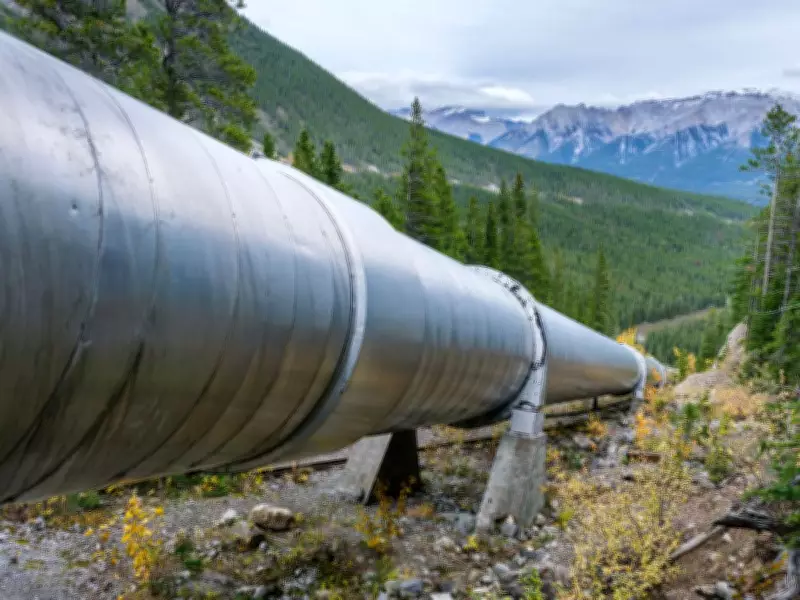
Canadian Natural Resources Ltd. (CNRL) president Scott Stauth stated on Thursday that a new oil pipeline to the West Coast and more competitive investment conditions are crucial for Canada to achieve another major phase of oilsands growth. Speaking during the company's first-quarter earnings call, Stauth emphasized the need for a supportive regulatory and fiscal framework to unlock the sector's potential.
Industry Calls for Regulatory Ease
Stauth joins a growing number of industry executives urging Ottawa to reduce regulatory barriers, including planned increases to the industrial carbon tax, to attract more capital. The debate occurs amid sensitive negotiations between the federal government and Alberta over a broad energy production deal, which may include federal support for a new bitumen pipeline to the West Coast.
Key Stumbling Block: Carbon Pricing
One major issue is the pace of industrial carbon pricing increases, which Ottawa aims to raise to a minimum effective credit price of $130 per tonne. This policy is central to Canada's emissions-reduction targets, but industry leaders argue it hinders investment.

Meanwhile, the industry is pushing Ottawa to focus on the Carney government's pledge to make Canada an 'energy superpower' and double non-U.S. exports within a decade. Economists and advocates say this ambition requires significantly more pipeline capacity.
Pipeline Capacity Needs
Stauth noted that expansions to Enbridge's Mainline system and the Trans Mountain pipeline, along with a potential revival of Keystone XL, are helpful. However, he stressed that a new one-million-barrel-a-day pipeline to the West Coast would be 'very important' for long-term growth. 'We need that pipeline to be able to grow oilsands in a significant way,' he said.
CNRL's Expansion Plans on Hold
CNRL has previously stated it is delaying a major $8.25-billion expansion of its Jackpine oilsands mine until federal regulations are clearer. The company reported an adjusted profit of $2.4 billion in the first quarter, roughly flat year-over-year, boosted by higher energy prices from geopolitical tensions.
- CNRL's synthetic crude oil (SCO) currently sells for US$5.70 more per barrel than U.S. benchmark West Texas Intermediate.
- Synthetic crude is in high demand as a feedstock for jet fuel and diesel.
- Based on forward pricing, SCO could continue to trade above WTI for the remainder of 2026.
CNRL's first-quarter production averaged 1,643,000 barrels of oil equivalent per day, a four per cent increase from a year earlier. Stauth concluded that global demand for light crude to produce diesel is driving this trend.