Carney Confirms Missed Deadlines in Alberta Energy Agreement
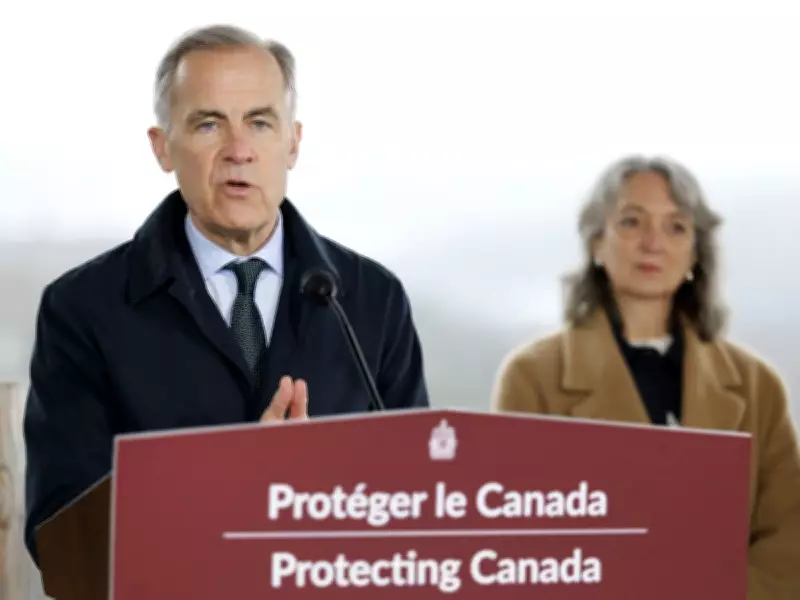
Prime Minister Mark Carney has publicly acknowledged that his government and the Alberta provincial administration will fail to meet Wednesday's deadline for implementing key components of their energy memorandum of understanding. The announcement came during a press conference in Wakefield, Quebec, where Carney addressed the delayed carbon pricing agreement and trilateral carbon capture project outlined in the fall agreement.
Progress Despite Delays
"No, I don't think we're going to announce an agreement tomorrow, but I feel very good about the progress and the state of the discussions," Carney stated on Tuesday. This confirmation follows similar remarks from Alberta Premier Danielle Smith, who told reporters in Houston, Texas last week that she didn't anticipate the April 1 deadlines would be met.
The November MOU between Carney and Smith established four key pillars:

- A draft cooperation agreement on environmental and impact assessments reached in early March
- An agreement-in-principle on methane equivalency finalized last week
- The carbon pricing agreement now delayed
- The carbon capture project timeline extended
West Coast Pipeline Remains Priority
The memorandum explicitly affirmed a pipeline to the West Coast as a key priority for the federal government, though approval remains contingent on the Pathways carbon-capture project moving forward. This $16.5 billion initiative proposes a comprehensive carbon capture and storage network led by a consortium of major oil sands producers.
The ambitious project aims to construct a 400-kilometre pipeline connecting over 20 facilities across Alberta to a centralized storage hub, with the ultimate goal of achieving net-zero emissions by 2050. However, the initiative has faced criticism from First Nations leaders and landowners who argue they weren't adequately consulted before the MOU signing.
Pipeline Prospects and Opposition
Alberta is expected to submit a formal proposal for the new West Coast Pipeline to the Major Projects Office by July 1. British Columbia Premier David Eby has expressed opposition to any new pipeline construction, arguing that no private proponent has come forward willing to undertake the project.
Contrary to this assessment, Enbridge's CEO told Bloomberg News last week that the company remains open to potential involvement in building the proposed pipeline. This corporate interest emerges against a backdrop of significant global oil market disruptions following the war in Iran that began in February.
Global Context and Industry Pressure
The Strait of Hormuz, a critical shipping lane handling approximately 20 percent of the world's oil and gas supply, has remained largely closed since the conflict began. This disruption has contributed to substantial increases in global oil prices, with West Texas Intermediate trading at US$102 per barrel and Western Canada Select at US$83 per barrel as of Tuesday afternoon.
TC Energy CEO François Poirier has renewed calls for Canada to streamline approval processes for major energy projects, noting that countries including Germany, India and Japan have expressed strong interest in Canadian resources amid heightened geopolitical risks.
"That urgency is only growing as energy supply is disrupted around the world—especially at chokepoints like the Strait of Hormuz," Poirier stated during a speech to the Canadian Club of Ottawa on Tuesday. "With safe shores and proximity to markets, Canada can offer a reliable alternative."
The combined pressures of missed domestic deadlines, international market disruptions, and industry demands for expedited processes create a complex landscape for Canada's energy policy as both federal and provincial governments navigate competing priorities and timelines.