Canadian LNG Emerges as Top Energy Opportunity Amid Global Supply Concerns
A comprehensive new survey of oil and gas executives and investors has identified liquefied natural gas (LNG) as the foremost opportunity for Canada's energy sector over the medium to long term. This ranking surpasses other significant developments, including changes in federal energy policies, the revival of oil pipeline projects, and even the growing prospect of data centers demanding substantial power.
Geopolitical Instability Reshapes Global Energy Landscape
The ongoing conflict in the Middle East has fundamentally altered global energy dynamics, sparking an urgent worldwide search for more stable and secure supplies. According to Tim Monachello, an analyst with ATB Capital Markets, which conducted the survey, "From a risk perspective and a view on global supply, Canadian LNG certainly ranks more favourably now than pre-conflict." The survey's central finding is clear: "LNG remains the top-ranked opportunity for the industry."
While oil prices surged above US$100 a barrel following the war in Iran and the effective blockage of the Strait of Hormuz, the impact extends to natural gas. Approximately 20 percent of global LNG supply typically transits this critical waterway. The blockade and damage to regional energy infrastructure have caused significant market volatility. For instance, LNG spot prices in Asia recently hit US$19.35 per million British thermal units, while benchmark AECO gas prices in Alberta closed at a much lower C$1.08 per thousand cubic feet.

Canada's Strategic Position and Project Momentum
Industry leaders argue that this geopolitical instability could accelerate the development of new LNG projects in North America, with Canada positioned as a reliable supplier. Jon McKenzie, chair of the Canadian Association of Petroleum Producers and CEO of Cenovus Energy, emphasized Canada's potential: "It's really clear to me that Canada has and is endowed with some of the biggest natural gas resources in the world. Those resources we sell at a significant discount to global prices because we don't have access to global markets. Canada should be a more material supplier of LNG to the world."
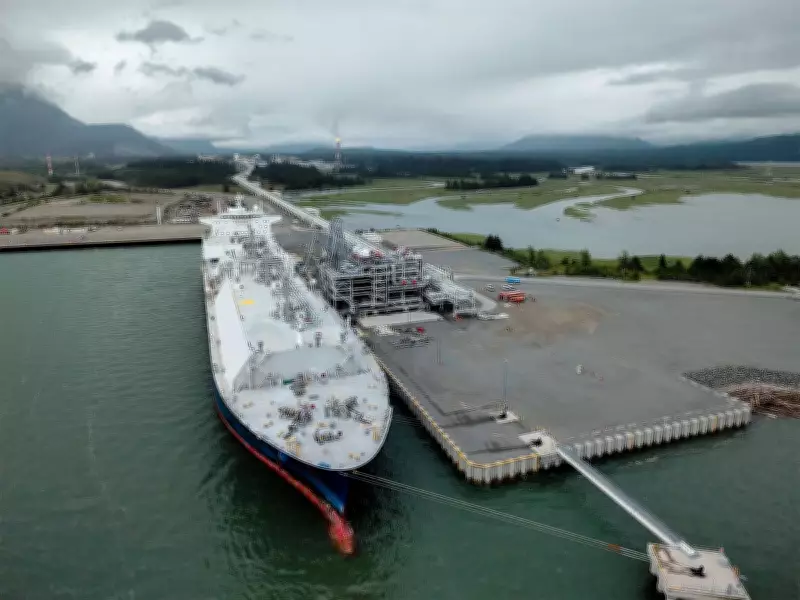
Canada's LNG infrastructure is already advancing. The landmark LNG Canada facility in Kitimat became the country's first operating export terminal for supercooled natural gas in 2025. Construction is actively underway on additional projects, including Cedar LNG and Woodfibre LNG on the British Columbia coast. Furthermore, a second phase of the LNG Canada project and the proposed Ksi Lisims LNG development in northern British Columbia await final investment decisions.
Long-Term Outlook and Industry Confidence
Despite a challenging year marked by weak natural gas prices, Western Canadian producers anticipate stronger market conditions ahead. The war's disruption is prompting a strategic reassessment among global buyers. Jamie Heard, vice-president of capital markets at Tourmaline Oil, noted, "This is going to reorient how major players in the industry think about where they own resource and where they think expansion projects should be sited, because you want to think about having assets that don't get shut in during times of instability."
The financial implications of the conflict are substantial. A recent report from Rystad Energy estimated that repairing damaged oil and gas infrastructure in the Middle East, including Qatar's LNG facilities at Ras Laffan Industrial City, could cost up to US$50 billion. This massive undertaking, coupled with ongoing instability, is likely to drive Asian LNG buyers to seek more secure, long-term partnerships with countries like Canada, which offers political stability and vast natural gas reserves.
The consensus from the industry survey and executive commentary underscores a pivotal moment: global energy security concerns are elevating Canadian LNG from a promising prospect to the nation's top-ranked energy opportunity, with the potential to reshape export markets and provide economic benefits for decades to come.