

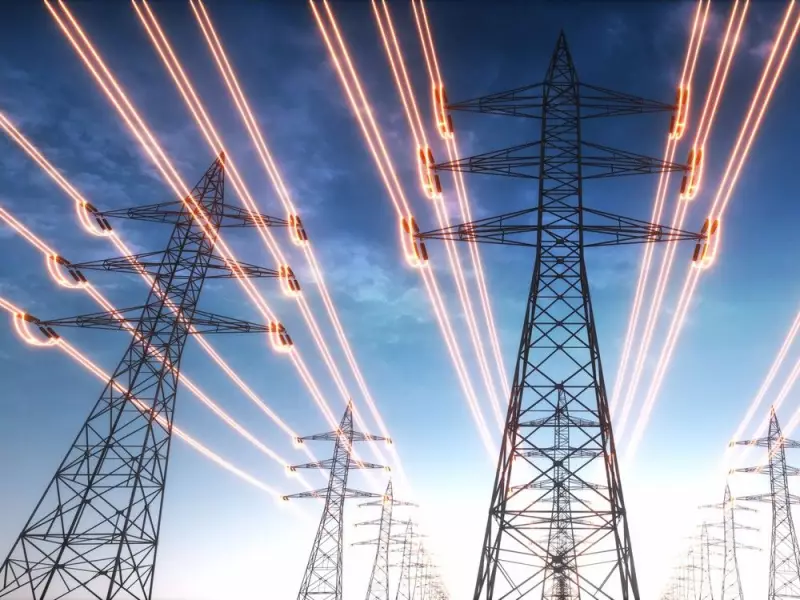
A profound shift is reshaping Canada's national conversation about energy and climate policy, moving away from theoretical ideals toward a more pragmatic focus on economic stability and growth.
The Great Energy Pivot
Federal and British Columbia politicians, many of whom previously opposed major energy projects, are now actively promoting new mega-projects for natural gas, oil, and hydroelectric power. This reversal marks a dramatic change in the political landscape.
The era advocating for "de-growth"—the idea of dismantling capitalism and reducing production to achieve ecological balance—has effectively ended. Few voices in mainstream discourse now support this approach.

Public Opinion Drives Policy Change
Recent Canadian opinion polls reveal a significant evolution in public priorities. While concern about climate change remains, it has been supplanted as the top issue for many citizens. There is growing public support for economic expansion and a demand for new energy sources.
This demand encompasses renewable options like wind and solar power, but also includes liquefied natural gas (LNG), nuclear energy, and crude oil. In response to public pressure and conservative political challenges, both the federal Liberal government and the B.C. NDP have reduced their carbon tax measures.
The political flip-flops have been numerous. In a telling moment, billionaire climate activist Bill Gates stated in 2025 that global warming "will not lead to humanity’s demise." Meanwhile, Canadian politicians are expediting pipeline construction.
Don Wright's Case for 'Energy Literacy'
Amid the turbulent policy changes, a clear and balanced voice has emerged. Harvard-trained economist Don Wright, former head of B.C.'s civil service under Premier John Horgan and a senior minister under Premier Gordon Campbell, published a foundational document in the fall of 2025 titled "energy literacy."
Wright presents a crucial historical observation: "No society in history has ever improved its standard of living without low-cost energy." He explains that while solar, wind, and hydropower are increasing, global consumption of oil and gas continues to rise simultaneously.
Wright acknowledges the "energy transition"—the global ambition to move away from fossil fuels—remains an important goal. However, he cautions that achieving it will be far more difficult than many optimistic projections suggest.
This skepticism exists despite hopeful predictions from figures like Elon Musk, who claimed just last month that "solar electricity will become by far the biggest source of power for civilization."
A Credible Voice in a Polarized Debate
Don Wright's analysis is gaining attention precisely because of his respected credentials and perceived lack of a partisan agenda. His extensive career includes leadership roles as president of the B.C. Institute of Technology (BCIT) and Central 1 Credit Union. He currently holds positions with the Public Policy Forum of Canada, the C.D. Howe Institute, and Global Public Affairs.
Even those who disagree with his conclusions respect his approach. Canadian environmentalist Max Fawcett, who has publicly critiqued Wright's arguments, has praised his "thoughtfulness" and the valuable perspective gained from his diverse experience in both the public and private sectors.
The core of Wright's argument is that realistic "energy literacy" must accept a fundamental economic truth: affordable and abundant energy is the non-negotiable foundation for a high standard of living. As Canada navigates this flipped debate, this principle is becoming central to policy discussions, balancing climate ambitions with economic realities.






