

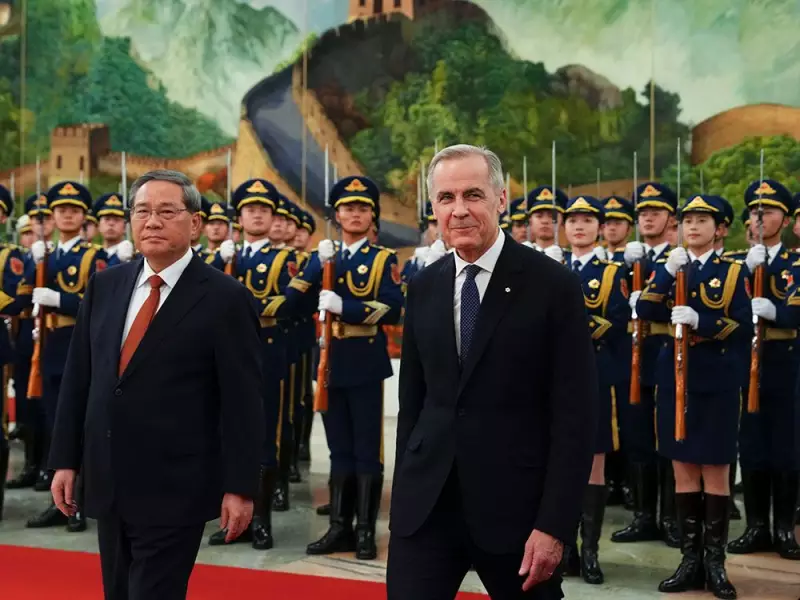
In a significant diplomatic and economic move, Canada and China have agreed to a new framework aimed at substantially expanding their energy partnership. The agreement, unveiled during Prime Minister Mark Carney's official visit to Beijing on Thursday, January 15, 2026, seeks to increase Canadian energy exports to the Asian giant while actively courting Chinese investment in Canada's clean technology sector.
A Strategic Shift in Bilateral Relations
This push to deepen energy ties marks a notable departure from the recent diplomatic coolness between the two nations. The Canadian government's open invitation for Chinese capital represents a strategic pivot, largely driven by the need to diversify export markets away from the United States amidst ongoing trade tensions and tariffs imposed by the U.S. administration of President Donald Trump.
Natural Resources Minister Tim Hodgson, speaking to reporters in Beijing, stated that the Chinese government was "very clear they would like more Canadian energy products." He confirmed Canada's openness to further Chinese investment, citing existing stakes held by firms like an arm of the China National Petroleum Corp. (CNPC) in the LNG Canada export terminal and other Chinese holdings in Alberta's oilsands.

Dual Focus: Fossil Fuels and Future Tech
The newly signed framework pledges to establish a ministerial dialogue and explore opportunities across a broad energy spectrum, including oil, gas, nuclear power, and clean technology. The pact has two clear, parallel objectives.
Firstly, it aims to capitalize on the growing Chinese demand for Canadian hydrocarbons. Canada's crude shipments to China surged by 84% in a single year following the opening of the expanded Trans Mountain pipeline. With the recent U.S. capture of Venezuelan President Nicolas Maduro disrupting Beijing's access to a key oil source, Chinese refiners are showing even greater interest in Canadian supply. Carney, alongside Alberta Premier Danielle Smith, is now advocating for an additional pipeline to reach the West Coast for export.
Secondly, and with equal emphasis, Canadian ministers are seeking Chinese expertise and capital for the transition to a greener economy. Minister Hodgson and Industry Minister Melanie Joly met with executives from battery manufacturing leader Contemporary Amperex Technology Co. (CATL). Hodgson highlighted CATL's existing role in Canadian grid storage projects, which help stabilize renewable energy, stating that such technology could help Canada reach its net-zero goals "in a more affordable way."
Broader Trade and Future Conversations
Alongside the energy pact, the two countries released a general plan for closer trade relations. A separate document explicitly notes that Canada "welcomes Chinese investments in Canada in areas such as energy, agriculture, consumer products and other sectors."
However, the path forward includes complex discussions. Carney was scheduled to meet with Chinese President Xi Jinping on Friday for what was anticipated to be a more challenging conversation, likely addressing persistent trade issues such as tariffs. This visit sets the stage for a nuanced relationship where Canada simultaneously pursues market diversification for its traditional energy sector and strategic partnerships for its clean energy future.






