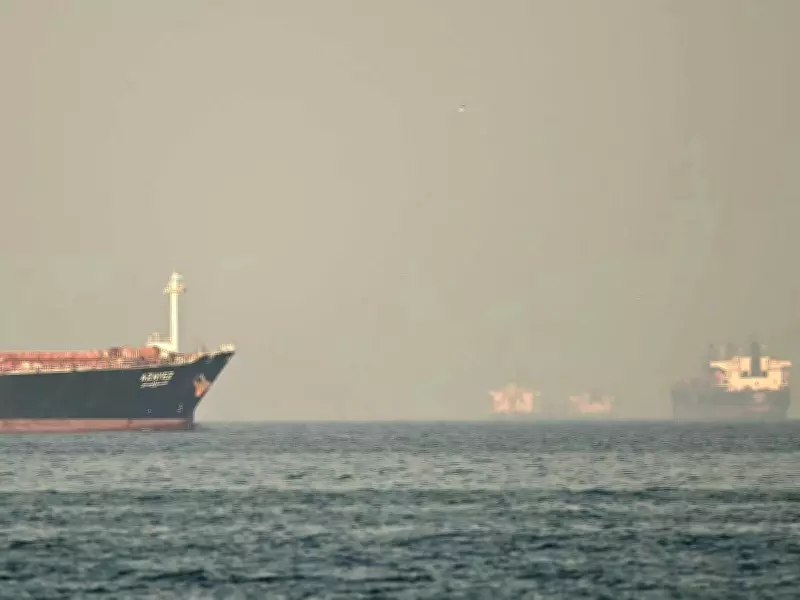
The Strait of Hormuz oil shock has yet to crash demand as wealthy nations dip into strategic reserves and pay premiums to secure supply. However, traders are now sounding the alarm that a severe adjustment is imminent.
Supply Losses and Demand Recalibration
The longer the vital oil channel remains closed, the more consumption must recalibrate downward to match a supply drop of at least 10%. Traders warn this will require people to buy less, either through unaffordable prices or government-mandated rationing.
A billion barrels of supply loss is already nearly guaranteed—more than double the emergency inventories released by governments shortly after the conflict began on February 28. Strategic buffers are being depleted rapidly, temporarily keeping oil prices in check. But with the closure now in its ninth week, demand destruction that initially hit less visible sectors like Asian petrochemicals is quietly spreading to everyday markets worldwide.

Critical Inflection Point
“Demand destruction is happening in places that are not visible pricing centers,” said Saad Rahim, chief economist of trader Trafigura Group, at the FT Commodities Global Summit in Lausanne. “That adjustment is already happening, but if this continues, it has to get larger and larger. We’re at a critical inflection point.”
The most dependent industries and markets—including petrochemical plants in Asia and the Middle East, and shipments of liquefied petroleum gas, a vital cooking fuel in India—saw an immediate hit when the US and Israel first attacked Iran on February 28.
Impact Shifts Westward
Now, with a stalemate between US President Donald Trump and his Iranian adversaries dragging on, the impact is increasingly shifting westward—to products central to consumers’ daily lives. Airlines in Europe and the US are cutting thousands of flights. Analysts warn of weakening gasoline consumption after prices hit $4 a gallon in the US, and diesel—used for trucks and construction equipment—is also under pressure.
Global Demand Slump
Global oil demand is on track to slump the most in five years this month, according to the International Energy Agency, which coordinated emergency measures by major economies to counteract the supply shock. Trading giant Gunvor Group estimates the loss could double next month to 5 million barrels per day, or 5% of world supplies, and sees a growing risk of economic recession. Other analysts and traders say the impact has already reached around 4 million barrels per day.
This toll is beginning to take shape. Germany has halved its economic growth forecasts, while the International Monetary Fund has trimmed global estimates, citing the war. In the most severe of three scenarios modeled by the European Central Bank, Brent prices peak at $145 a barrel and cut the region’s growth in half. Brent crude closed at about $105 a barrel on Friday.