Canada's energy minister is touting global demand for the nation's products after revealing a deal that could send millions of tonnes of liquefied natural gas to Europe over two decades.
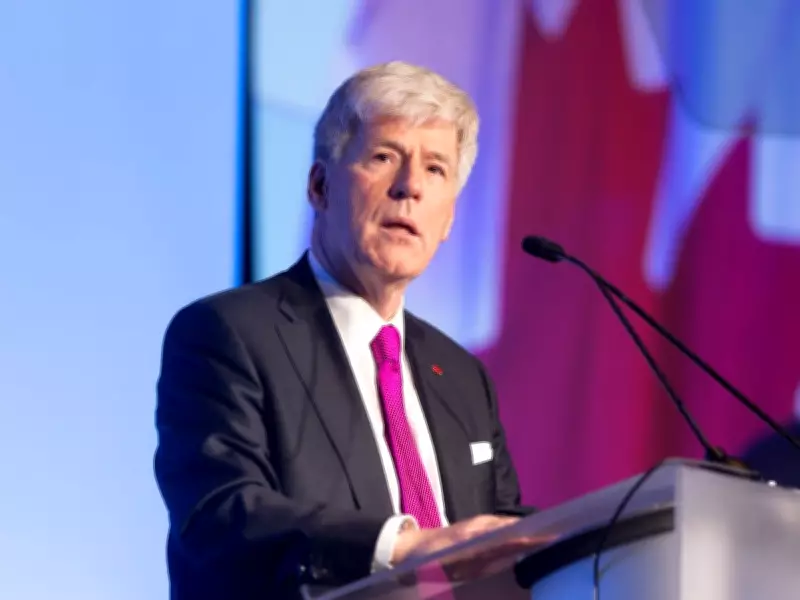
"We're in a world where our allies are begging us, are begging us to produce our resources," Tim Hodgson, Canada's minister of energy and natural resources, told reporters in Vancouver.
Hodgson said Germany's state-owned energy company, Securing Energy for Europe (SEFE), has agreed to buy up to one million metric tonnes of LNG per year from the Ksi Lisims export project in northwest British Columbia, just south of the Alaska border.

"This contract represents the first agreement that we see long-term, low-carbon LNG from Canada being shipped to our allies in Europe," Hodgson said. "This is one of the largest buyers of natural gas in Europe."
Long-Term Commitment to Energy Security
The joint venture partners behind Ksi Lisims LNG, which the federal government has earmarked for fast-tracking under the major projects list, have yet to reach a final investment decision or begin construction. However, officials said Thursday the deal — which includes an agreement for up to 20 years of deliveries, beginning in 2030 — represents an important step towards a final investment decision on the $17-billion facility.
Ksi Lisims received regulatory approval last September and could be operational as early as 2029. It would carry up to 12 million tonnes of LNG per year over its 40-year lifespan. The latest deal means five of the proposed facility's 12 million tonnes of capacity are spoken for. French oil company TotalEnergies has committed to two million tonnes over 20 years, and global gas giant Shell has committed to buying two million tonnes annually.
Indigenous and Environmental Opposition
Some First Nations oppose Ksi Lisims, including the Gitanyow, Gitxsan and Wet'suwet'en nations, whose territory the pipeline would cross for part of its route. Also opposed is a consortium of environmental groups.
Strategic Shipping Routes
Located just south of the Alaska border, the project sits on well-established shipping lanes — North America's shortest marine route to energy-hungry Asian markets. Smaller shipments may flow through the Panama Canal, while larger vessels would go around South America or Africa, Hodgson said. In some cases, he added that SEFE could "swap" cargo with other buyers to reduce distances travelled.
"That's a common practice in global energy markets," he said. "That makes production off of B.C. even more valuable, because it's not just valuable for people buying in Asia, but it makes it more and more attractive to people in Europe."
The deal underscores Canada's role as a reliable energy supplier to allies facing energy shortages due to geopolitical tensions. Hodgson emphasized that the agreement signals strong international confidence in Canadian energy production and its commitment to low-carbon LNG.