Alberta's Energy Agreement with Ottawa Confronts Significant Obstacles
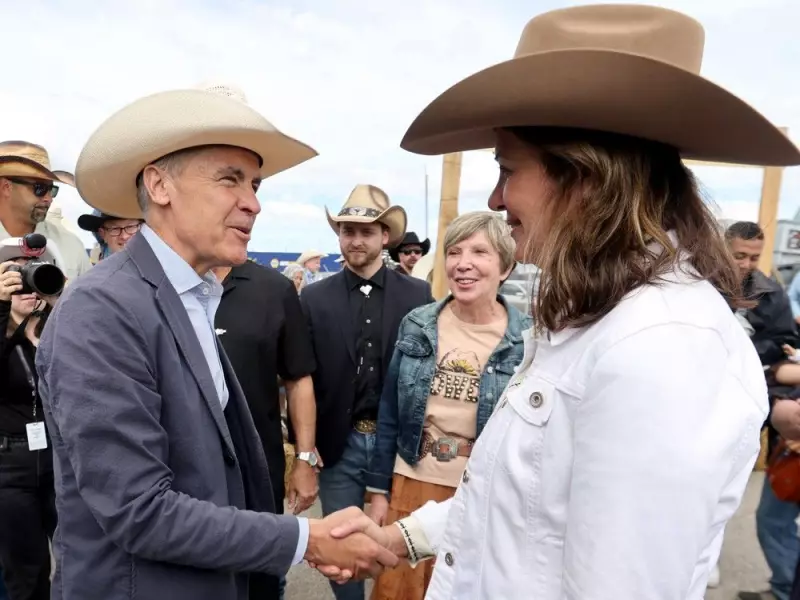
The memorandum of understanding signed by Alberta Premier Danielle Smith and Prime Minister Mark Carney in late November 2025 was initially celebrated as a landmark achievement in federal-provincial cooperation on energy policy. Many Albertans, including Premier Smith herself, expressed optimism that this agreement would facilitate increased hydrocarbon production and related infrastructure development through improved alignment between Ottawa and Alberta.
Problematic Conditions Within the Agreement
However, a closer examination reveals substantial challenges embedded within the document that threaten its viability. The agreement contains what critics describe as two explicit "poison pills" that could ultimately doom the entire arrangement to failure.
The first critical issue involves the requirement that Alberta and Ottawa must agree by April 1, 2026, to implement an industrial carbon emissions price. This provision explicitly mandates that Alberta accept a minimum price of $130 per tonne, which translates to approximately $10 per barrel of oil. Notably absent from the memorandum is any language addressing the maintenance of competitiveness for existing or future Alberta hydrocarbon production. Instead, the document has Alberta reaffirming its commitment to achieving net-zero emissions by 2050 without apparent consideration of the economic consequences.

The second problematic condition relates to carbon capture and sequestration requirements. The agreement stipulates that the CCS project known as Phase 1 Pathways must proceed before any incremental pipeline infrastructure can commence. This provision lacks clarity regarding funding mechanisms, as global hydrocarbon markets are not currently absorbing these costs—estimated at more than $200 per tonne of captured emissions. Furthermore, there is no specification about how extensively this CCS requirement would apply to existing Alberta production.
Federal Government's Position
When presented with an opportunity in Parliament during early December 2025 to endorse increased Alberta hydrocarbon production without these conditions—through support for a Conservative motion—the Carney government voted against it. This action reinforced concerns about the federal government's commitment to Alberta's economic interests.
Since the memorandum's signing in late November 2025, Prime Minister Carney has not indicated any willingness to publicly acknowledge that these conditions represent an untenable risk to future Alberta hydrocarbon development. Nor has he conceded that international markets are not compensating Alberta for imposing these substantial costs upon itself.
Instead, the Prime Minister continues to engage with entities seeking some form of "veto" over Alberta hydrocarbon expansion, despite their lack of legal authority for such intervention. He persists in failing to unconditionally embrace the economic opportunity represented by expanded hydrocarbon production in Canada, particularly in Alberta.
Questioning the Agreement's Value
This situation raises fundamental questions about whether the memorandum was worth signing from Alberta's perspective. Some observers speculate that from Carney's viewpoint, the intention may have always been to engage in endless, aimless negotiation—"ragging the puck," to use a hockey metaphor that the Prime Minister frequently employs.
The agreement now places Alberta in a difficult position, facing potentially crippling conditions that could undermine its energy sector while receiving little apparent benefit in return. As the April 2026 deadline approaches, Alberta must confront an agonizing choice about whether to accept terms that may compromise its economic future or seek alternative approaches to energy development and federal-provincial relations.