Alberta-Ottawa Pipeline Negotiations Miss Initial Deadline as Talks Continue
Negotiations between the Alberta provincial government and the federal government in Ottawa have missed their first major deadline under a four-month-old memorandum of understanding (MOU) on energy development. The April 1 deadline passed without finalizing key agreements on carbon pricing and a flagship oilsands emissions-reduction project, which are critical preconditions for federal support of Alberta's proposed million-barrel-per-day oil export pipeline to the West Coast.
Progress Amidst Delays
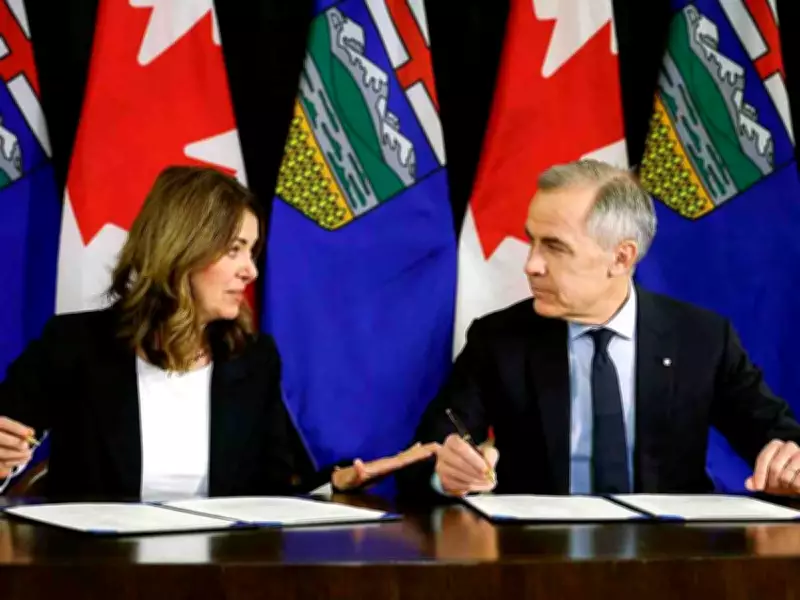
Despite the missed timeline, both governments have emphasized progress in the talks. Prime Minister Mark Carney described a recent meeting with Alberta Premier Danielle Smith as a "very constructive conversation," noting that "it's a complex, very important set of negotiations." He expressed confidence that "we'll get the right agreement at the right time" and anticipated a resolution soon.
Negotiators have largely settled two of the four key points originally due on April 1. These include a draft deal on reducing oilpatch methane emissions and a "one project, one review" approach to streamline environmental assessments for major projects under Alberta's jurisdiction. Such projects are expected to encompass oilsands developments, carbon capture and storage initiatives—including the Oil Sands Alliance's multibillion-dollar Pathways carbon capture project—as well as power generation facilities and pipeline projects within Alberta.

Carbon Pricing as Major Sticking Point
The most significant unresolved issue remains carbon pricing. Under the MOU, Alberta, which froze its industrial carbon tax in May 2025, agreed in principle to ramp up to an effective price of $130 per tonne for heavy emitters. Current negotiations are focused on the timeline for reaching this level, with climate groups urging Ottawa not to delay beyond 2030.
Premier Smith and some industry voices advocate for a slower pace, arguing that a rapid increase could impose costs and complexities that deter global investors from the Canadian market. "The question is how quickly should it rise and whether or not it's putting us at a competitive disadvantage," Smith stated on Tuesday. "So my conversations with the prime minister are figuring out that pacing, that benchmark, that threshold, because we have to make sure that our industry is strong and healthy." Currently, Alberta's headline carbon price stands at $95 per tonne.
Implications for Pathways Project
Carbon pricing is also expected to be a pivotal factor in negotiations involving Ottawa, Alberta, and the Oil Sands Alliance regarding the proposed multibillion-dollar carbon capture and storage network. The Pathways mega-project, backed by oilsands majors including Canadian Natural Resources Ltd., Cenovus Energy Inc., ConocoPhillips Canada Resources Corp., Imperial Oil Ltd., and Suncor Energy Inc., aims to transport captured CO2 from multiple oilsands facilities to a storage hub in Alberta's Cold Lake area.
As talks continue, the outcome of these negotiations will significantly impact Alberta's energy sector and its environmental commitments, shaping the future of oil exports and emissions reduction efforts in the region.