Vulcan County council has approved rezoning land for the site of a proposed AI data centre, opening the door for the applicant to apply for a permit approving the project.
Council last month rezoned 350 hectares to rural industrial from rural general to allow for the development of a data centre campus, which applicant Eric Steeves says would likely see a project of 1,000 megawatts dedicated to IT computation built over several phases.
Farmer-Driven Project Advances
Steeves is working with the Alberta Electric System Operator on the grid connection and plans to apply to the Alberta Utilities Commission this fall. If the schedule stays on track, he will likely apply for a Vulcan County development permit next spring.

While he heard plenty of opposition to the project during a June 10 public hearing, Steeves, a fifth-generation farmer, said he will pursue the project until he gets “an absolute no.”
“Once a farmer sets their head on something and they understand the benefit, not only for their operation but their community, there’s a lot of motivation to keep going,” said Steeves.
Public Concerns and Environmental Impact
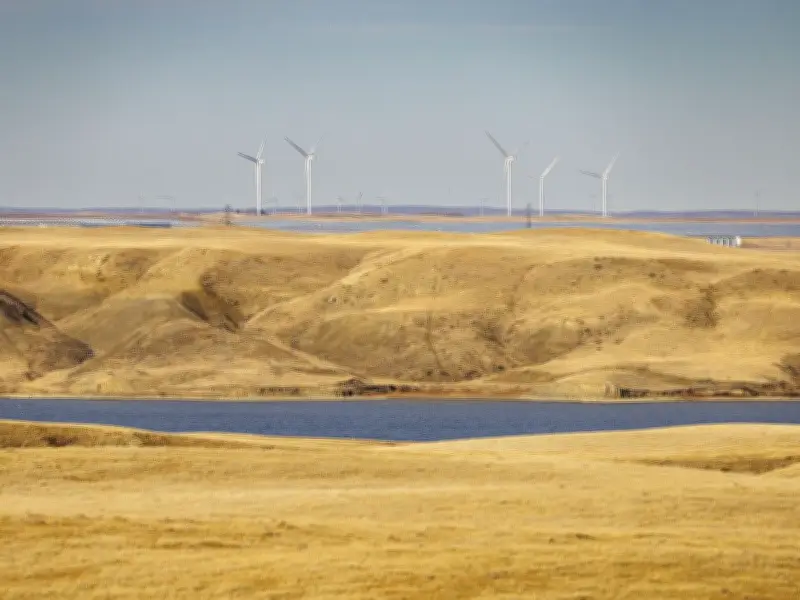
During last month’s hearing, members of the public raised numerous concerns relating to the sheer size of the project, water use and noise effects. The data centre would draw its water from nearby Travers Reservoir and is near the 465-megawatt Travers solar project, the largest of its kind in Canada.
Colleen Clements, who along with her husband have a cottage at nearby Little Bow Resort near Travers Reservoir, said she is concerned about the environmental effect of the data centre.
“There’s fish, migratory birds, amphibians. There’s a lot of animals there, and I’m worried about their safety,” said Clements.
Site Suitability Assessment
An analysis following the public hearing, prepared to gauge how suitable the site would be for the project, noted the proposed project’s proximity to the Travers solar project and a transmission line, as well as the Bow River Irrigation District’s commitment to provide up to 678 hectare-metres of water per year for cooling purposes.
“The volume proposed is significant in a region prone to drought, and that concern is acknowledged,” wrote Maxwell Kelly, a planner with the Oldman River Regional Services Commission.
Alberta Environment and Protected Areas will determine if the proposed allocation is appropriate from a water management perspective, through the water licence amendment process, wrote Kelly.
Kelly wrote the nearest residence is more than 1.4 kilometres away, and most are more than three kilometres from the site.
“The matters raised at the public hearing are legitimate and have been considered,” wrote Kelly, who found the land suitable to be rezoned to rural industrial.