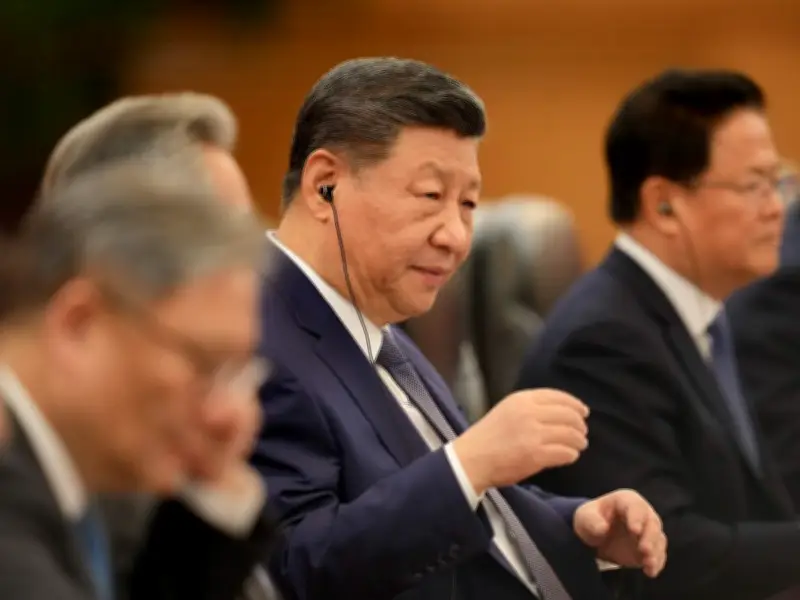
At a meeting of Chinese officials at the end of last year, President Xi Jinping outlined the main driver of growth for 2026: domestic demand. China should “co-ordinate efforts to promote consumption and expand investment,” he told a top economic policy meeting in December, according to a February article in the Communist Party’s flagship journal.
Six months later, China is struggling on both fronts. Retail sales turned negative last month for the first time since 2022, underscoring deep consumer apathy that has lingered long beyond the pandemic. Investment weakness has also resurfaced, with a gauge now down 4.1 per cent over the first five months of the year compared with the same period in 2025 — the worst since the early days of COVID.
The declines in the official monthly data display an economy that is struggling to shake off a sense of domestic malaise despite Beijing’s desire to galvanize demand.

Renewed Slowdown
“What we’re seeing here is a renewed slowdown in the economy,” said Frederic Neumann, chief Asia economist at HSBC. “Some of the optimism at the beginning of the year is beginning to fade again quite quickly.” He added: “The question is: have we hit a wall yet?”
The data woes lay bare a longstanding challenge for Beijing. Policymakers are under pressure to wean China’s economy off its current growth model but have few obvious alternatives to stimulate activity.
Export Tensions and Property Woes
Buoyant exports have already inflamed tensions with China’s trading partners, notably the European Union and the United States, which under President Donald Trump waged a tariff war against China last year. Exports have continued to rise this year, adding 19 per cent in May.
At home, the slowdown in the property sector, now in its fifth year, has sapped consumer confidence. New home prices dropped a further 0.2 per cent in May on the previous month across 70 cities.
Analysts said the decline in retail sales was also partly being driven by the waning use of a goods trade-in program, which has heavily affected sectors such as household appliances and autos. The data only covers goods and catering.
Investment Tumbles
Investment, meanwhile, is tumbling. In addition to the property slowdown, high input costs linked to the war in Iran are weighing on infrastructure investment, according to Logan Wright, an analyst at Rhodium. He added that this had not been offset by manufacturing investment.
That said, “the weakness in consumption is more structural”, Wright added.
Fixed-asset investment has long been subject to concerns over data quality, given incentives for local governments to overreport. The metric also declined last year, after Xi called for a crackdown on excessive industrial competition, and later hit out at wasteful spending. Some analysts accordingly saw that decline as a reflection of under-reporting, as well as possible data revisions, pointing to contradictions with other indicators.