

The global economy is demonstrating notable resilience in the face of renewed trade tensions, with the Organisation for Economic Co-operation and Development (OECD) forecasting a 3.2% growth rate for the year 2025. This projection, released on December 2, 2025, suggests that international commerce and economic activity are adapting to the challenges posed by the return of tariffs under the Trump administration.
Steady Growth Amidst Trade Headwinds
The OECD's analysis indicates that, despite the implementation of significant tariffs by the United States, the world's economic engines continue to hum. The organization points to diversified supply chains, stronger domestic demand in several major economies, and strategic adaptations by multinational corporations as key buffers against protectionist policies. The forecast of 3.2% global GDP growth represents a stable, if not spectacular, pace of expansion for the current year.
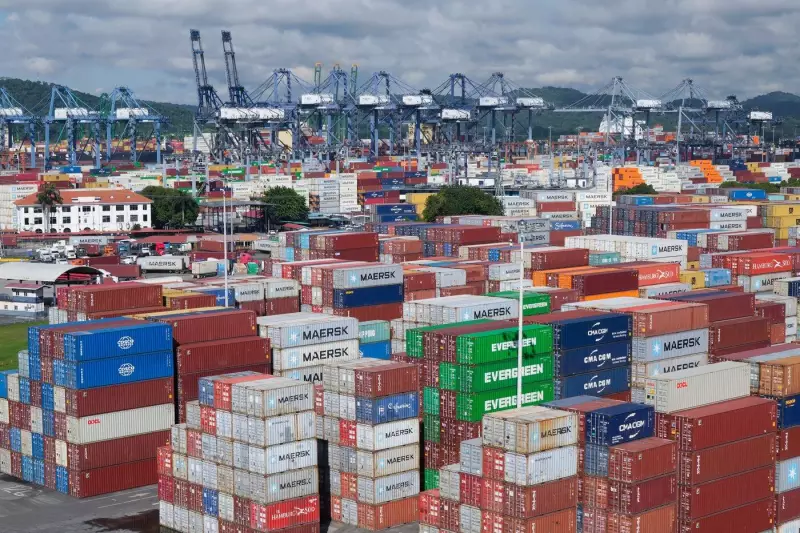
This resilience is particularly evident in global trade hubs. The report's context is underscored by imagery of shipping containers stacked at the Balboa port in Panama City, a critical node in international logistics, captured in September 2025. The visual symbolizes the continued, albeit potentially more costly, flow of goods across borders.

Implications for the Canadian Economic Landscape
For Canada, a nation deeply integrated into global supply chains and heavily reliant on trade with the United States, the OECD's forecast carries significant weight. The report implies that while Canadian exporters face well-documented challenges from U.S. tariffs, the broader international economic environment remains supportive of growth. This external stability may help offset some domestic pressures and provide a floor for national economic performance.
The forecast arrives amidst a flurry of other national news, from provincial budget discussions to public safety promises in major cities, reminding readers that the global economic context sets the stage for local fiscal and policy decisions. A resilient world economy can provide Canadian policymakers with more room to maneuver on issues like healthcare, infrastructure, and taxation.
Looking Beyond the Headline Number
While the headline figure of 3.2% growth is positive, the OECD's assessment likely contains nuanced warnings. Growth at this level, while resilient, may be unevenly distributed across regions and sectors. The persistence of tariffs could continue to distort trade patterns, increase costs for consumers and businesses, and foster uncertainty that dampens long-term investment.
The key takeaway for Canadian businesses and policymakers is the demonstrated capacity of the global system to absorb shocks. However, this should not be mistaken for immunity. Strategic planning must account for a trading environment where geopolitical factors, including U.S. trade policy, remain a volatile and persistent feature. The focus may increasingly shift to strengthening economic ties with other growing markets and enhancing domestic competitiveness to thrive within this new normal.
In conclusion, the OECD's 2025 forecast paints a picture of a world economy that is bending but not breaking under the weight of renewed protectionism. The 3.2% growth projection offers a measure of cautious optimism, suggesting that the foundational drivers of global commerce remain potent, even as the rules governing them become more contentious.






