

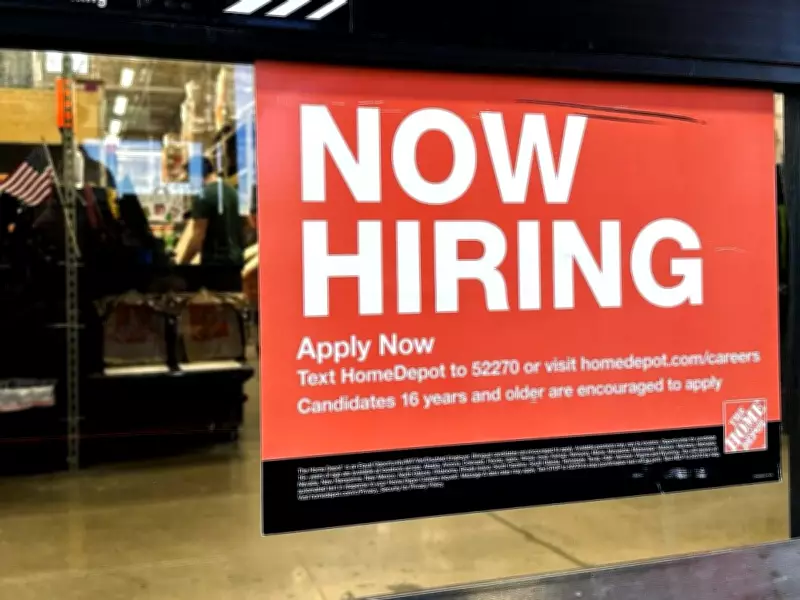
U.S. Economy Adds 130,000 Jobs in January 2026 as Unemployment Rate Drops
The United States labor market demonstrated a significant rebound at the start of 2026, with employers adding 130,000 jobs in January and the unemployment rate unexpectedly declining to 4.3%. This represents the strongest monthly payroll increase in more than a year, according to data released Wednesday by the Bureau of Labor Statistics.
Labor Market Stabilization After a Slow 2025
The January report suggests the labor market is finding its footing after a challenging 2025 marked by rising unemployment and minimal hiring. Revisions to prior year data revealed a marked slowdown in hiring, with job gains averaging just 15,000 per month in 2025, down significantly from the initially reported 49,000 monthly pace.
"Coming off of a hiring recession in 2025, this is welcome news," said Heather Long, chief economist at Navy Federal Credit Union. "I think Fed Chair Powell was right — the labor market appears to be stabilizing."

The data reinforces Federal Reserve officials' inclination to keep interest rates on hold for now, with traders pushing out their timeline for the next rate cut to July from June. In leaving rates unchanged last month, Chair Jerome Powell specifically cited signs of steadying in the job market.
Sector Breakdown and Benchmark Revisions
The pickup in January hiring was led by several key sectors:
- Health care accounted for the majority of job growth
- Construction showed positive employment gains
- Professional and business services added jobs
- Manufacturing saw its first monthly employment increase in more than a year
Federal government payrolls continued their decline during this period.
With the release of each January employment report, the BLS benchmarks payrolls to the more accurate but less timely Quarterly Census of Employment and Wages. This adjustment revealed that job growth was nearly 900,000 lower in the 12 months through March 2025 than initially reported, though the figure roughly aligned with preliminary estimates.
Mixed Signals in the Broader Labor Landscape
While the January data shows encouraging signs, the broader labor market presents a mixed picture. Though layoffs remain generally constrained, there has been a wave of job-cut announcements by major companies including Amazon.com Inc. and United Parcel Service Inc. in recent weeks. Additionally, heading into 2026, job openings across the economy dropped to their lowest level since 2020.
Economists expect hiring to remain generally sluggish throughout 2026, though more clarity around the impact of economic policies and lower borrowing costs could encourage some employers to boost headcount.
Household Survey Shows Modest Improvement
The jobs report comprises two separate surveys: one of businesses that produces the payroll figures, and another of households that determines the unemployment rate. Within the household survey, the participation rate — the share of the population that is working or looking for work — edged up to 62.5% in January, indicating slightly more people are entering or returning to the labor force.
This January employment data provides the first comprehensive look at labor market conditions in 2026 and suggests a potential turning point after a year of economic uncertainty and employment challenges.






