

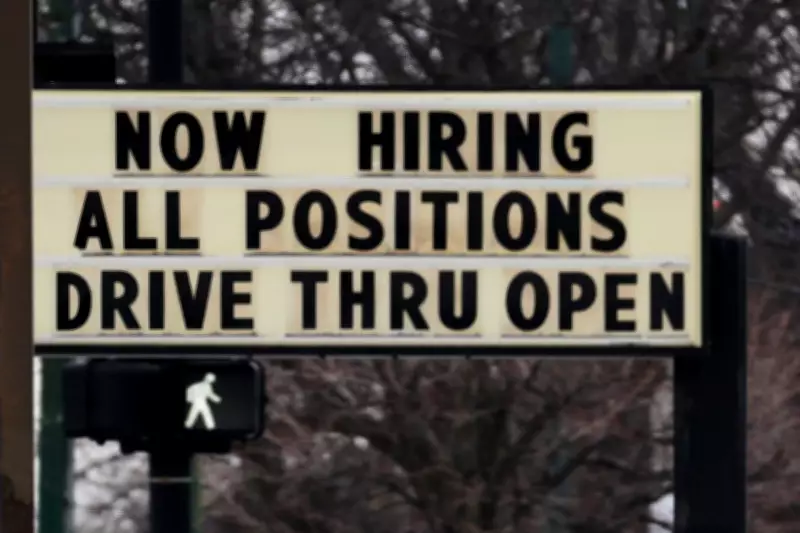
U.S. Employers Add 130,000 Jobs in February 2026, Surpassing Expectations
The American economy demonstrated unexpected resilience in February 2026, as employers added a robust 130,000 jobs during the month. This figure notably exceeded many analysts' projections, suggesting continued momentum in the labor market despite broader economic uncertainties. The hiring surge was observed across multiple sectors, indicating a diversified expansion rather than concentration in a single industry.
Downward Revisions Cloud the Broader Employment Landscape
However, the positive headline number was partially offset by significant downward revisions to job growth estimates for the preceding months of 2024 and 2025. Official data released concurrently revealed that thousands of previously reported jobs were eliminated from the records after more comprehensive analysis. These revisions highlight the volatile nature of initial employment estimates and underscore the importance of viewing labor market trends over extended periods rather than relying on single-month snapshots.
The revisions serve as a reminder that economic data is often subject to adjustment, as more complete information becomes available from employers. This process can substantially alter the perceived trajectory of job creation, making it challenging for policymakers and businesses to base decisions on preliminary figures.

Sectoral Analysis and Geographic Distribution
While the overall job gains were widespread, certain industries exhibited particularly strong hiring activity. The service sector, including hospitality and healthcare, contributed significantly to the February increase. Additionally, professional and business services saw notable expansion, reflecting ongoing demand for specialized skills in the evolving economy.
Geographically, job growth was not uniform across the United States. Major metropolitan areas and regions with thriving technology or manufacturing hubs reported the most substantial employment increases. This uneven distribution raises questions about economic inclusivity and the availability of opportunities in less dynamic areas.
Implications for Monetary Policy and Economic Outlook
The mixed employment report presents a complex picture for Federal Reserve officials tasked with managing inflation and supporting sustainable growth. The stronger-than-expected February numbers might suggest a resilient economy that can withstand tighter monetary conditions. Conversely, the downward revisions to prior months could indicate underlying weaknesses that warrant a more cautious approach.
Economists are closely monitoring wage growth data, which was not detailed in the initial release, as it provides crucial insights into inflationary pressures and consumer spending capacity. The interplay between job creation, wage dynamics, and productivity will shape the economic narrative in the coming quarters.
As the labor market continues to evolve, stakeholders across the spectrum—from workers and employers to investors and policymakers—will need to navigate the nuances of employment data to make informed decisions in an increasingly complex economic environment.






