Referendum Speculation Drives Up Quebec's Borrowing Costs by $100 Million
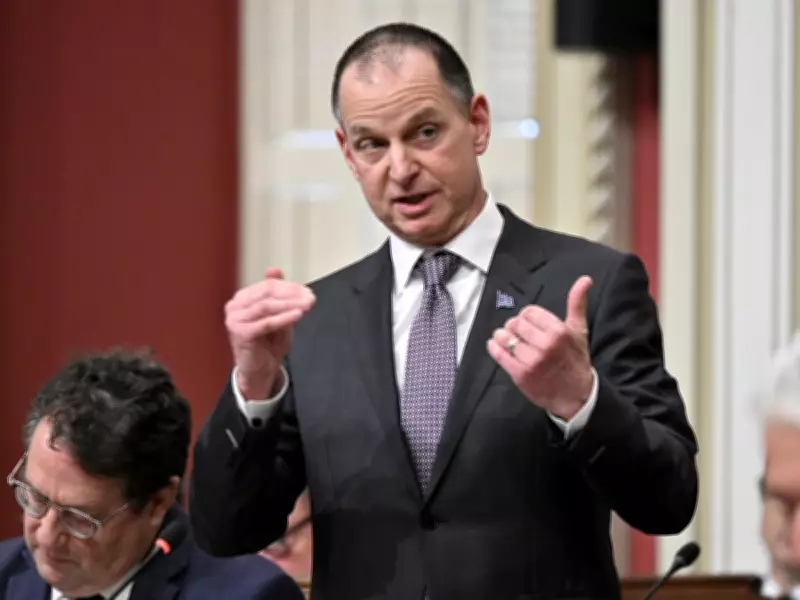
Quebec Finance Minister Eric Girard has issued a stark warning that mere discussion of another sovereignty referendum is already imposing significant financial costs on the province. According to Girard, the political uncertainty surrounding a potential independence vote is increasing Quebec's borrowing costs by approximately $20 million annually, with projections indicating a cumulative impact of $100 million over five years.
Quantifying the Financial Impact
During a press briefing at the Quebec legislature, Minister Girard provided specific figures detailing how referendum speculation affects provincial finances. "The impact of the uncertainty with respect to a referendum is approximately five basis points per year," Girard explained. "These five basis points cost approximately $20 million a year. When you do the cumulative effect, after five years that would be $100 million, after 10 years $200 million."
This financial burden emerges as Quebec borrows approximately $40 billion annually to manage its total debt. The minister emphasized that "the perspective of a referendum in the first mandate (of a PQ government) means it costs more to borrow" and that this uncertainty compounds an already volatile economic environment.

Political Context and Reactions
The finance minister's comments follow recent statements from Parti Québécois (PQ) Leader Paul St-Pierre Plamondon, who reaffirmed his party's commitment to holding a sovereignty referendum during a first mandate if elected in the upcoming October general election. However, Plamondon suggested the vote could occur later in the four-year term, prompting criticism from political opponents who describe his plans as ambiguous and likely to prolong uncertainty.
Quebec Liberal Leader Charles Milliard seized on this ambiguity, accusing the PQ leader of creating "a cloud of confusion and political fog" regarding referendum intentions. Milliard declared his readiness to lead the No campaign should a referendum materialize, stating: "If by chance there was a No side bus to drive, the only person who has a licence to drive it, to lead the troops to safe harbour in a clear and reliable way is me and the Liberal Party of Quebec."
Broader Economic Implications
Beyond immediate borrowing costs, Minister Girard outlined broader economic challenges associated with sovereignty. "Sovereignty is a legitimate political project, but economically the transition period would be extremely difficult," he cautioned. The minister highlighted that the federal government currently spends approximately $20 billion more in Quebec than it collects, including $12 billion annually in equalization payments.
Girard, who voted No in the 1995 referendum, offered to participate in any future campaign against independence to explain these economic impacts. He suggested that Quebecers recognize these financial realities, contributing to continued majority opposition to sovereignty.
Current Political Landscape
The referendum discussion unfolds against a shifting political backdrop. Recent polling data from Pallas Data-Qc125-L'Actualité indicates the Quebec Liberals gaining ground while PQ support shows signs of slipping. This development has intensified political maneuvering as parties position themselves regarding potential referendum participation.
Minister Girard called for clarity from all political leaders, including Premier François Legault, regarding their stance in any future referendum. The finance minister's warnings underscore how political speculation can translate into tangible financial consequences, with Quebec's public finances already feeling the effects of referendum uncertainty even before any formal vote is scheduled.