

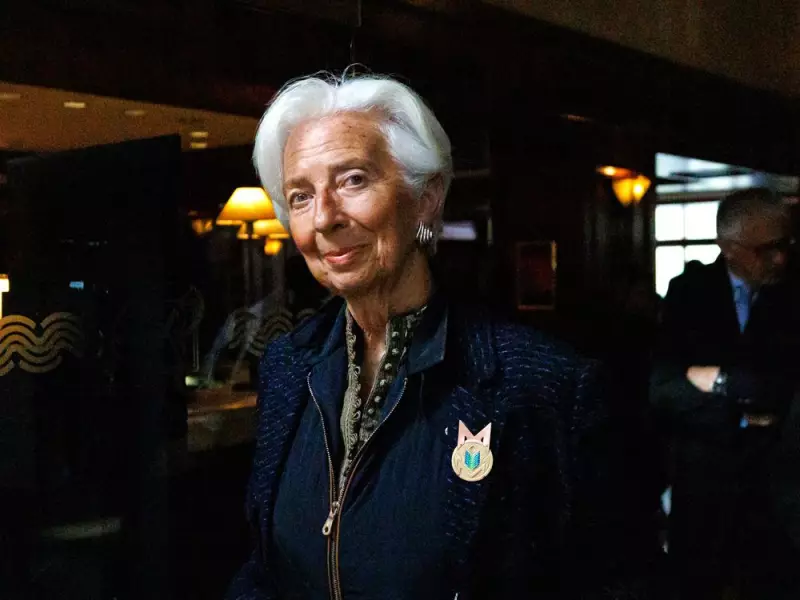
Christine Lagarde, the European Central Bank president who has dubbed herself Europe's "Mrs. Crisis," is entering the final phase of a storied career, confronting a world vastly different from the one she first entered public service in over two decades ago.
A Legacy Forged in Turmoil
With her term set to conclude in October 2027, Lagarde can now see the finish line. She has recently dispelled rumors of an early departure to lead the World Economic Forum, firmly stating her commitment to see her mandate through. "I'm not a quitter, no — because when you have a mission, you have an objective, you just have to deliver," she affirmed in a recent interview. The French official, who celebrated her 70th birthday last week, admitted that had she known the ECB presidency was an eight-year term instead of five, she "would have given it a longer thought."
Her tenure, and indeed her entire high-profile career, has been punctuated by continuous global upheaval. From the financial crisis to the pandemic and the recent inflation shock, Lagarde's leadership has been tested by one emergency after another. Today, she faces a new set of profound challenges that threaten the continent's stability and prosperity.

The New World Order and Europe's Place in It
In a candid conversation for Bloomberg's "Leaders" series with Francine Lacqua, recorded in November 2025 from the ECB's Frankfurt headquarters, Lagarde painted a picture of a world undergoing dramatic fragmentation. "We will live in a world which is more volatile, which is more prone to shocks, and which has clearly fragmented under our eyes," she warned. She expressed hope for a "moment of reckoning" as Europe grapples with this new reality.
The geopolitical landscape has been aggressively reshaped by the actions of the United States under President Donald Trump and the rising influence of China. Since returning to the White House in 2024, Trump's policies have included military engagements and a push to reorient global trade. Meanwhile, China continues to expand its economic reach. Lagarde noted that Trump's actions have, ironically, spurred a sense of urgency in Europe. "There is a momentum that has built over the course of the last year in particular, and President Trump has triggered that — so, thank you," she stated, while questioning if the European response is swift enough.
Despite the European Union's initiatives to boost competitiveness and bolster its defenses, Lagarde criticized the bloc's endemic bureaucracy and discord, which slow critical decision-making and hinder its strategic autonomy.
Internal Threats: Populism and Economic Inertia
Beyond external pressures, internal fractures weigh heavily on the ECB president's mind. She directly linked growing inequality across the continent to the surge in support for political extremes and populist movements. This social division complicates policy-making and threatens the unity required to face global challenges.
On the economic front, while inflation has been stabilized around the two per cent target following a historic surge, new dangers loom. The ECB views political and strategic inaction as a direct threat to business investment and consumer confidence. This inertia could undermine the hard-won victory over price instability and rekindle economic stagnation.
Sensing the critical juncture, Lagarde has amplified her calls for decisive action. She is pushing for more substantial reforms, faster implementation of policies, and greater solidarity among EU member states. The race to succeed her is already quietly beginning, though much can change before her retirement. Whoever follows will inherit a continent navigating the treacherous waters of a fragmented global order, a task for which "Mrs. Crisis" has provided a rigorous final act of preparation.






