

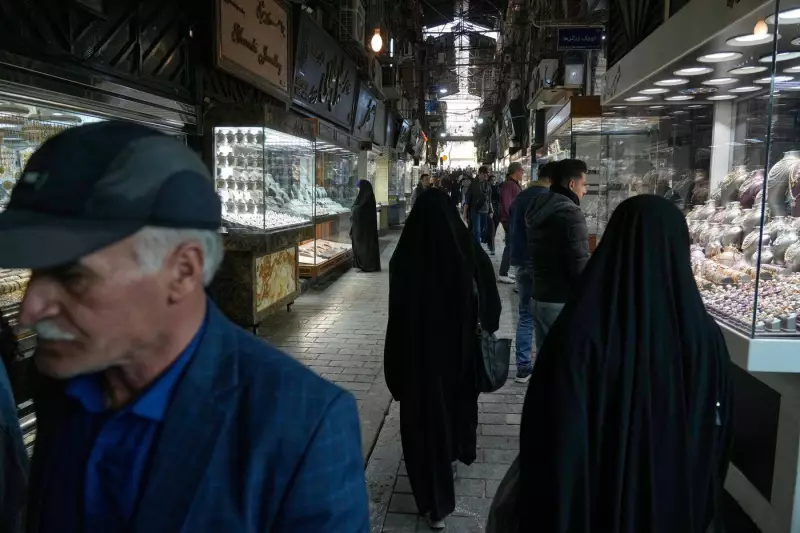
In the aftermath of the recent conflict with Israel, citizens in Iran are urgently seeking safe havens for their wealth as the national currency continues its sharp decline. The economic uncertainty has triggered a significant shift towards tangible, portable assets like gold.
A Rush to the Grand Bazaar
This trend was visibly on display at Tehran's historic Grand Bazaar on Saturday, November 29, 2025. The bustling gold market saw increased activity as individuals and families looked to convert their rapidly devaluing Iranian rials into something perceived as more stable. Photographs from the scene captured by The Associated Press show a steady flow of people navigating the market's corridors, assessing prices and making transactions.
The move towards gold and other precious commodities is a direct response to the severe pressure on the Iranian rial following the war. When geopolitical tensions spike, local currencies in affected regions often bear the brunt of investor fear and economic instability. For ordinary Iranians, purchasing gold represents a traditional and trusted method of preserving purchasing power.

Portable Wealth as a Financial Shield
Financial experts note that in economies experiencing high inflation or currency devaluation, "portable wealth" becomes a critical hedge. Unlike money in bank accounts or real estate, assets like gold coins, jewelry, and even foreign currency can be easily moved or hidden. This liquidity and tangibility offer a sense of security during tumultuous times.
The strategy underscores a deep-seated lack of confidence in the formal financial system's ability to protect savings. When the future value of paper money is in doubt, people historically revert to assets with intrinsic, globally recognized value. The current situation in Iran mirrors patterns seen in other nations facing economic sanctions or political isolation.
Broader Economic Implications
This collective action by citizens to protect their wealth has wider consequences for the Iranian economy. A large-scale move out of the national currency can exacerbate its decline, creating a vicious cycle. It also signals a challenging environment for domestic investment and long-term financial planning.
The fallout from the Israel conflict has thus extended beyond the military and diplomatic spheres, striking at the heart of everyday economic life for millions of Iranians. The scenes at the Grand Bazaar are a tangible manifestation of this economic anxiety, where personal finance strategy becomes intertwined with global geopolitical events.
As the situation develops, market watchers will be monitoring the stability of the rial and the continued demand for hard assets. The population's pivot to gold is a stark indicator of the economic distress and the pragmatic steps people are taking to safeguard their futures against further uncertainty.






