

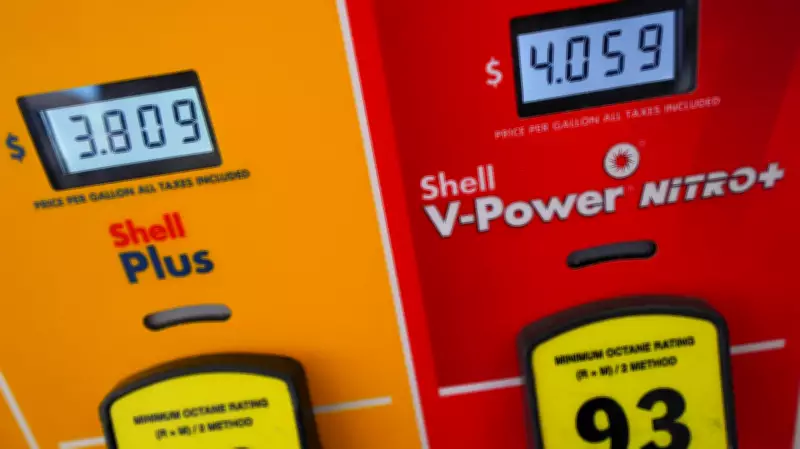
The tangible cost of President Donald Trump's military campaign against Iran is now hitting American consumers directly at the gas pump, with prices surging dramatically in just over three weeks since the conflict began.
Gasoline Prices Skyrocket Nearly $1 Per Gallon
According to data from AAA, the national average for a gallon of regular gasoline has experienced a staggering increase. On February 26, just two days before the war commenced, the average stood at $2.98. By March 23, that figure had soared to $3.96—a dramatic 98-cent gain that represents one of the most rapid price escalations in recent history.
"Absolutely Recessionary" Impact on Consumers
Gary Cohn, Trump's former chief economic adviser, characterized the price surge as "absolutely recessionary" during an interview with Yahoo Finance's 'Opening Bid' program. He emphasized how these increases directly erode consumer purchasing power in a highly visible manner.

"There's nothing more instantaneous to a consumer than standing there holding down the gas nozzle and watching the numbers tick on the pump," Cohn explained. "If they were paying $80 a week ago, and they're paying $85 this week, and they were paying $60 a month ago, they know that 'I lost $20 of disposable income in filling up this tank of gas.'"
Cohn further illustrated the cumulative effect, noting that multiple fill-ups per week translate to significant financial strain. "If you're filling up four times a week, that's $80 of disposable income coming out of your pocket after tax. That's the difference between taking your family out to dinner and not taking your family out to dinner a couple times in a week."
Global Oil Market Turmoil Drives Price Increases
The gasoline price surge directly reflects turmoil in global oil markets, where crude prices have escalated from approximately $70 per barrel to peaks reaching as high as $112. This volatility stems from multiple factors related to the Iran conflict.
Iran has retaliated against U.S. and Israeli attacks by targeting oil and gas infrastructure belonging to American allies in the region, significantly constraining supply. Additionally, Iran has closed the strategically vital Strait of Hormuz, a critical maritime chokepoint through which 20-25% of global oil shipments typically flow.
Administration Response Appears Unprepared
The Trump administration's reaction to the sudden price shock suggests they were caught unprepared. On March 10 alone, crude oil futures experienced extreme volatility within just two hours, falling more than 8% after Energy Secretary Chris Wright announced that the U.S. Navy had escorted a ship through the Strait of Hormuz, then rising nearly 5.5% after Wright deleted the social media post, and finally surging another 9.5% on news that Iran might have placed mines in the strategic waterway.
Subsequent administration actions have included contradictory measures. On March 11, Trump authorized the release of 172 million barrels from the Strategic Petroleum Reserve, though this action will require 120 days to deliver and the reserve was only about 60% full when the preemptive strikes began.
In a particularly contradictory move on March 20, Treasury Secretary Scott Bessent rolled back sanctions on Iranian oil—the very nation the United States is currently at war with—in an attempt to drive down soaring prices. This followed a similar action regarding Russian oil just one week prior, despite Russia's ongoing war against Ukraine, a U.S. ally.
Market Volatility Discourages Production Increases
Amid this extreme market turbulence, major U.S. oil producers are not ramping up production to offset supply constraints. Industry representatives cite the challenging environment created by price instability.
"Market volatility and short-term price fluctuations create challenges for industry planning, which relies on stability to drive future investment," explained Todd Staples, president of the Texas Oil and Gas Association, in comments to Politico.

High Prices Expected to Persist for Years
Economic experts warn that consumers should brace for sustained high prices rather than temporary spikes. Justin Wolfers, an economics professor at the University of Michigan, emphasized this point on social media alongside a graphic of West Texas Intermediate crude oil price futures extending through October 2029.
"It's not just a blip," Wolfers wrote. "Increasingly oil futures markets are suggesting that the Iran war is going to have (or has already had) effects that will last for years."
This prolonged outlook suggests American consumers will continue feeling the financial impact of the Iran conflict every time they visit the gas station, with no immediate relief in sight as geopolitical tensions continue to roil global energy markets.





