

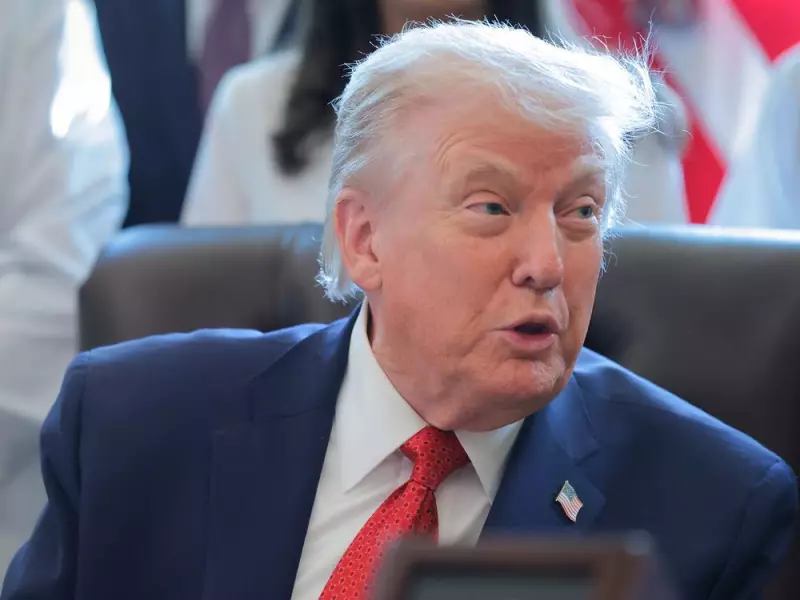
President Donald Trump's brief moment of vindication over cooling inflation has been clouded by significant doubts about the reliability of the data itself, casting a shadow over his claims of progress on the critical issue of affordability.
Questionable Data Following Federal Shutdown
On Thursday, December 19, 2025, the U.S. Bureau of Labor Statistics (BLS) released its Consumer Price Index (CPI) report for November. The figures showed cooler-than-expected price growth, which the White House quickly hailed. However, economists and investors on Wall Street met the report with deep skepticism, citing major gaps in the data collection process.
The core of the problem stems from the federal government shutdown that lasted from early October to mid-November 2025. During this period, the BLS—an agency traditionally viewed as the global gold standard for economic statistics—was closed. This disruption forced the agency to suspend the entire October CPI report and compromised the November data.

The November figures were collected only during the second half of the month, a period that includes Black Friday sales which artificially depress prices. This truncated and atypical collection window resulted in incomplete entries and a heavy reliance on estimated figures.
Wall Street Labels Report 'A Mess'
The financial markets' reaction was telling. Bond markets barely moved, reflecting a widespread lack of confidence in the report's findings. Thomas Simons, chief U.S. economist at Jefferies, captured the prevailing sentiment in a note to clients, stating, "We need to acknowledge that this data is a mess," and added that while there were "encouraging signs of disinflation, something feels off."
The quantitative evidence of the report's problems was stark. The number of data series within the main CPI report deemed inadequate for publication jumped to 45 in November from just 17 in September, prior to the shutdown.
Erika McEntarfer, the former BLS chief whom President Trump dismissed in the summer of 2025 following a lacklustre jobs report, commented on the situation. "It’s probably not a good idea to turn off the navigation lights on the U.S. economy for over a month," said McEntarfer, now a distinguished fellow at the Stanford Institute for Economic Policy Research. "I think we are learning that you can’t just switch the lights back on and everything immediately becomes clear again."
Broader Turmoil in U.S. Economic Institutions
This episode amplifies a growing sense of instability within America's key economic institutions. The nation is currently grappling with:
- Deep discord within the United States Federal Reserve.
- A series of disrupted official economic reports.
- Extreme volatility in tariff policies on imports.
- A president making increasingly optimistic and unfounded claims about solving the affordability crisis.
The BLS itself has been operating under an interim leader since McEntarfer's firing and suffers from chronic funding shortages. These shortages have drained staff and forced the agency to trim data collection for the CPI—a benchmark that underpins trillions of dollars in financial contracts and social security payments to American seniors.
The resulting haze over the world's largest economy is complicating decision-making for businesses, investors, and policymakers alike. With weak polling numbers applying pressure, President Trump's embellished economic claims face a new credibility test, not from political opponents, but from the compromised integrity of the government's own statistical dashboard.






