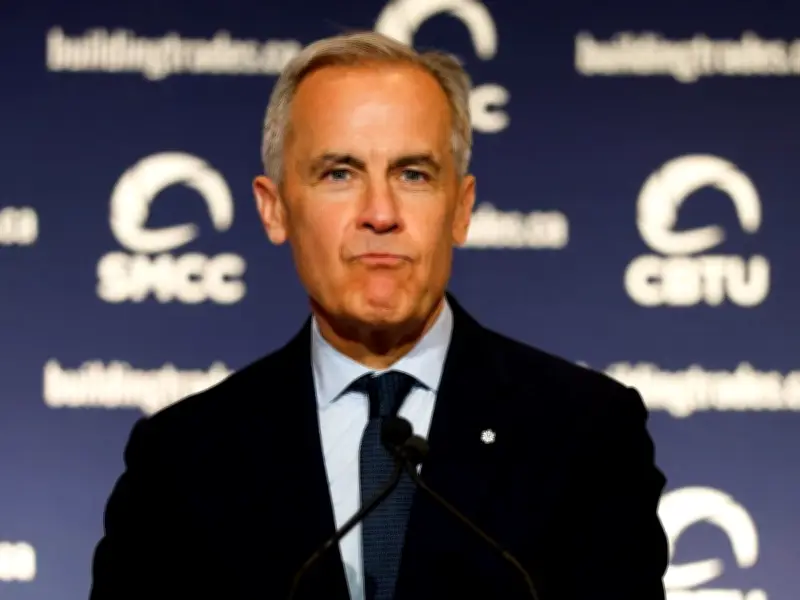
According to new data from the Treasury Board Secretariat, the federal public service headcount shrank by more than 12,000, or about 3.5%, in the past year. This reduction aligns with Prime Minister Mark Carney's goal to cut the public service by around 30,000 by 2028/29.
While the 3.5% decline is welcome after a decade of rapid growth, the federal government's overall footprint continues to expand in other ways. Since 2015, the public service headcount is still up 34.3%, far outpacing population growth of 16.5% and private-sector employment plus self-employment growth of 15.0%.
Excluded Employees Mask True Size
The Treasury Board data includes active employees in the federal pay system as of March 31, 2026, but excludes many jobs paid for by the federal government that are not technically part of the public service. For example, Canada Post employs more than 60,000 workers and the CBC more than 7,000, but these Crown corporation employees are not counted in the secretariat's figures.

Many taxpayer-funded jobs are statistically counted as private-sector positions. For instance, the federal government recently announced $4.2 million in new spending to accelerate economic, business, and tourism growth in Timmins, Ontario. This includes a $421,820 handout to a resort for a conveyor-style lift for skiers, snowboarders, hikers, and mountain bikers. The workers manufacturing and installing this lift are effectively government-employed during that time but are counted as private-sector employees or self-employed contractors.
More Examples of Hidden Growth
Another example is a federal grant of $159,069 to expand a farmer's market pavilion, covering new signs, site improvements, and washrooms. Workers on this project will be paid with taxpayer money but classified as private-sector or self-employed workers.
According to Matthew Lau, an adjunct scholar at the Fraser Institute, these examples illustrate how the government's footprint extends beyond the official headcount. The latest fiscal forecast shows federal program spending (excluding net actuarial losses) rising from $489.9 billion in 2024/25 to $512.8 billion in 2025-26 and $536.1 billion in 2026-27. This indicates that Ottawa's footprint is expanding and taxpayer costs are rising, despite the reported decline in the public service headcount.
While shrinking the public service by 3.5% in one year is a positive step, there remains much more work before the federal government can be considered fiscally responsible.