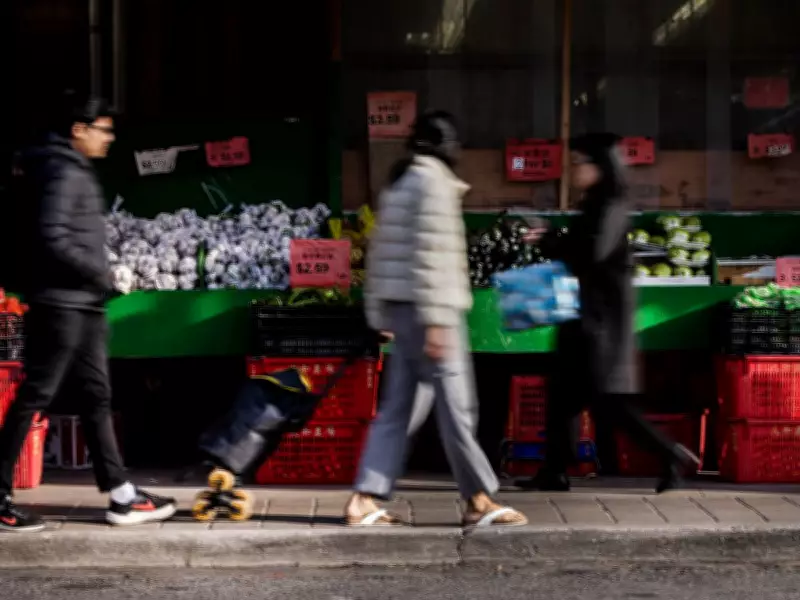
Canada's Persistent Food Inflation Crisis
Canada currently holds the dubious distinction of having the highest food inflation rate among G7 nations at 7.3 percent, a position it has maintained for two consecutive months. According to a comprehensive new report from financial group Desjardins, this troubling trend shows no signs of abating, with grocery prices expected to remain elevated throughout much of 2026.
The Driving Forces Behind Rising Costs
The report identifies multiple factors contributing to the sustained increase in food prices. Higher import prices, rising input costs, and extreme weather events are all playing significant roles in keeping food inflation stubbornly high. These elements combine to create a perfect storm that continues to pressure Canadian household budgets.
Economist LJ Valencia, author of the Desjardins report, emphasizes that food inflation has evolved into "a significant public policy issue" following its post-pandemic acceleration and resurgence in mid- to late-2025. The problem extends beyond temporary market fluctuations to become a structural challenge affecting millions of Canadians.

Impact on Household Spending and Food Security
Canadian families are allocating an increasingly larger proportion of their household income to food purchases. The report reveals that food's share of the Consumer Price Index (CPI) – which measures average price changes over time for a fixed basket of goods and services – has reached 16.9 percent of the overall CPI basket. This represents a record high since 2011 and marks a reversal of the declining trend that characterized much of the century.
Simultaneously, food insecurity has been escalating since the pandemic, with the report indicating that nearly one in five Canadian households now experiences insufficient access to food due to financial constraints. This troubling statistic underscores the human dimension of what might otherwise appear as abstract economic data.
Government Interventions and Their Limitations
Government policies have attempted to provide relief through measures such as the GST/HST holiday that ran from December 2024 to February 2025 and the recently announced Canada Groceries and Essentials Benefit. Valencia acknowledges these targeted interventions can offer temporary assistance, particularly to financially vulnerable households who disproportionately spend larger portions of their income on food.
However, Valencia cautions that such temporary measures can also distort CPI numbers. The suspension and reintroduction of taxes following the GST/HST holiday may partially explain the high food inflation expected in the short term. Comparing costs year-over-year could "amplify or mute" inflation numbers depending on how these policy interventions are timed and implemented.
"What's really important is that we need to address the medium- to long-term issues that are affecting food prices and solidify and secure our food supply chain," Valencia emphasizes. While short-term income supports can provide helpful relief, they fail to address the root causes of persistent food inflation.
Long-Term Solutions for Food Price Stability
The report suggests several strategic approaches that could potentially help lower and stabilize food prices over time. These include diversifying import sources, strengthening supply chain resilience, investing in resources to help Canadian farmers adapt to extreme weather patterns, and increasing market competition.
Valencia cites the Competition Bureau's 2023 market study report, which recommended growing the number of independent grocers and encouraging international retailers to enter the Canadian market. Food inflation represents a multi-faceted challenge that extends beyond domestic competition to include international factors affecting the price of imported food products.
The complexity of the issue requires coordinated policy responses that address both immediate consumer pain and the structural vulnerabilities in Canada's food system. As Canadians continue to allocate more of their household budgets to basic necessities, the pressure mounts for sustainable solutions that can provide genuine relief while building greater resilience against future price shocks.