

Alberta's Economic Paradox: Growth Amidst Looming Budget Deficit
As Alberta prepares to unveil its provincial budget for the 2026-27 fiscal year, a striking economic paradox emerges. The province's economy remains robust, projected to lead the country in GDP growth, yet analysts anticipate a substantial budget deficit that could reach billions of dollars. This contradiction highlights the complex relationship between Alberta's economic performance and its reliance on volatile oil markets.
The Fastest Skater on a Slow Team
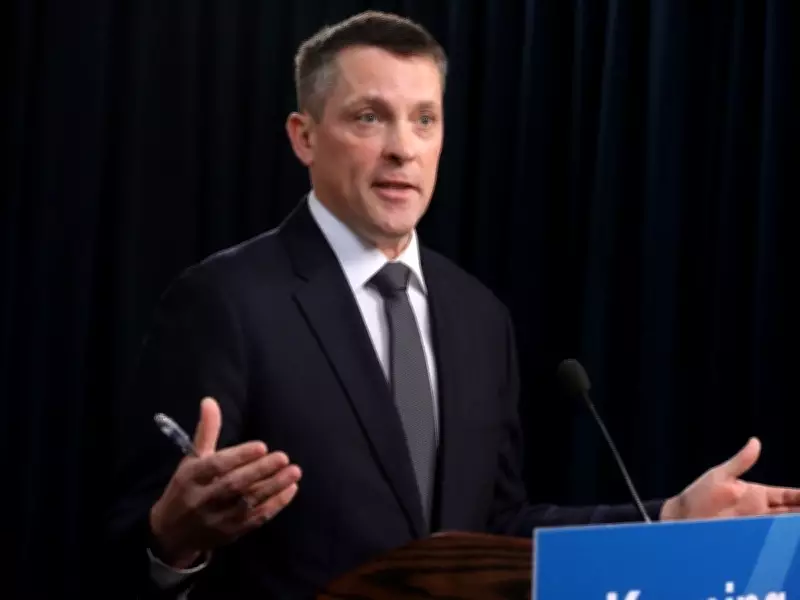
Finance Minister Nate Horner described Alberta's economic position as "the fastest skater on a slow team across this country," emphasizing the province's relative strength despite broader national challenges. In a recent interview, Horner pointed to several positive indicators, including record oil production levels and significant housing construction activity that have driven economic expansion.
"We expect to lead the country in GDP growth again, but the population growth will definitely slow. I wish I had a crystal ball when it came to the price of oil," Horner stated, acknowledging the uncertainty surrounding Alberta's primary revenue source.

Job Creation and Economic Performance
Recent employment data reveals Alberta's economic vitality. In January alone, the province created 20,000 new jobs, bringing the unemployment rate down to 6.4 percent—slightly below the national average. Compared to the same period in 2025, an additional 86,000 Albertans were employed, representing nearly 25 percent of all jobs created across Canada despite Alberta comprising only 12 percent of the national population.
This job creation surge reflects broader economic momentum that has positioned Alberta as an outlier in national economic performance. However, this growth occurs against a backdrop of fiscal challenges that threaten to undermine budgetary stability.
The Oil Price Conundrum
The central issue facing Alberta's budget is the persistent gap between actual oil prices and the levels needed for fiscal balance. Premier Danielle Smith has previously stated that oil prices need to reach approximately US$74 per barrel to balance the provincial budget. Currently, West Texas Intermediate crude trades around US$65.42 per barrel—a significant improvement from earlier in the year when prices hovered near $57, but still insufficient for budgetary equilibrium.
Charles St-Arnaud, chief economist at Servus Credit Union, forecasts a potential deficit of $9.8 billion if oil prices remain around US$60 per barrel throughout the new fiscal year beginning April 1. "That's quite a big deficit to have in a moment where actually the economy is not in a recession," St-Arnaud observed, highlighting the unusual nature of Alberta's economic situation.
St-Arnaud further explained: "The Alberta economy is actually in a relatively good place... What's going on? It's really that oil prices are much lower than what was budgeted last year and what would be needed to balance the budget."
Budgetary Implications and Revenue Sensitivity
The provincial government's revenue remains exceptionally sensitive to oil price fluctuations. According to previous budget documents, every $1 change in the price of West Texas Intermediate crude over the course of a fiscal year alters provincial revenues by approximately $750 million. This sensitivity creates significant volatility in budget planning and underscores the challenges of maintaining fiscal discipline in a resource-dependent economy.
As Finance Minister Horner prepares to release the new budget, he has kept specific details confidential while emphasizing the broader economic context. "We created almost 25 percent of the jobs across Canada for a population of 12 percent," Horner noted, pointing to Alberta's disproportionate contribution to national employment growth.
Looking Ahead: Economic Growth Versus Fiscal Reality
The upcoming budget presentation will reveal how Alberta plans to navigate this complex economic landscape. While the province enjoys strong economic fundamentals—including job creation, GDP growth, and industrial expansion—the structural challenge of oil price dependency continues to create fiscal pressure.

Economists and analysts will be watching closely to see how the government addresses this paradox of growth amidst deficit. The budget's assumptions about future oil prices, spending priorities, and economic projections will provide crucial insights into Alberta's fiscal strategy for the coming year and beyond.
As Alberta continues to outperform national economic indicators, the province must simultaneously confront the reality that economic strength does not automatically translate to budgetary balance when primary revenue sources remain below critical thresholds. This tension between economic performance and fiscal health defines Alberta's current financial landscape and will shape policy decisions in the months ahead.





