Global Markets Display Resilience as Oil Prices Retreat Amid Iran Aggression
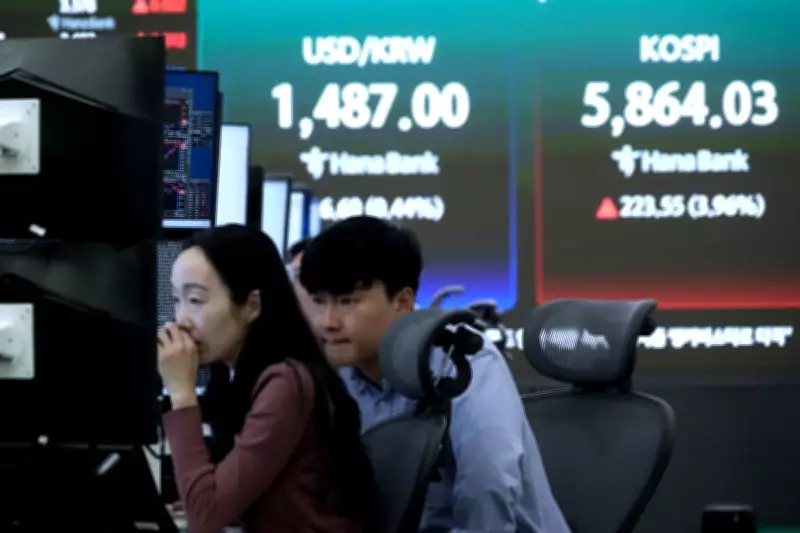
In a surprising turn of events, world financial markets have demonstrated notable strength, with shares advancing across major indices despite a recent barrage of attacks by Iran. This development underscores the complex interplay between geopolitical tensions and economic fundamentals, as investors navigate an increasingly volatile global landscape.
Market Movements Defy Geopolitical Turmoil
Contrary to expectations, global equity markets have posted gains, reflecting a cautious optimism among investors. This upward trend is particularly noteworthy given the heightened tensions following Iran's aggressive actions. Analysts suggest that market participants may be focusing on underlying economic indicators rather than immediate geopolitical risks, signaling a potential shift in investment strategies.
Meanwhile, oil prices have experienced a slight retreat, slipping back from recent highs. This movement in the energy markets is significant, as it indicates that supply concerns may be easing or that demand projections are being recalibrated in light of current events. The relationship between geopolitical instability and commodity prices remains a critical factor for global economic stability.

Economic Indicators and Investor Sentiment
The resilience shown by global markets suggests that investor sentiment may be more robust than anticipated. Several factors could be contributing to this phenomenon:
- Diversified portfolios: Investors have increasingly diversified their holdings across sectors and regions.
- Technological advancements: Innovations in financial technology and trading platforms may be facilitating more efficient market responses.
- Policy interventions: Central banks and governments may be implementing measures to stabilize markets during periods of uncertainty.
However, experts caution that the situation remains fluid. The potential for escalation in geopolitical conflicts could quickly alter market dynamics, making continuous monitoring essential for investors and policymakers alike.
Long-Term Implications and Outlook
Looking ahead, the ability of global markets to withstand geopolitical shocks will be tested. The current scenario highlights the importance of:
- Risk management strategies: Both individual and institutional investors must prioritize robust risk assessment frameworks.
- International cooperation: Collaborative efforts among nations may help mitigate the economic impacts of geopolitical tensions.
- Adaptive policies: Economic policies may need to evolve to address the interconnected nature of modern global challenges.
While the immediate market response has been positive, the long-term effects of Iran's actions and similar geopolitical events remain uncertain. Continued analysis of economic data, political developments, and market trends will be crucial for understanding the full implications of these events on the global economy.