Trump's Remarks on Ill Colleagues Highlight Workplace Presenteeism Concerns
Recent statements from President Donald Trump praising staff members who continue working despite serious illnesses have raised significant questions about the workplace environment he fosters. These comments have brought the issue of presenteeism—the practice of working while sick—into sharp focus, revealing potential cultural and economic implications.
Revealing Private Medical Information
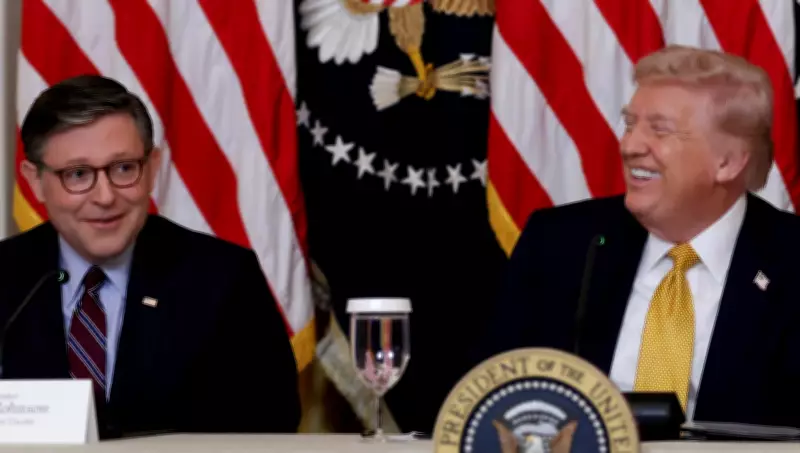
On Monday, Trump disclosed that Representative Neal Dunn, a Republican from Florida, "would be dead by June" without presidential assistance following a terminal diagnosis. During a conversation with House Speaker Mike Johnson, Trump encouraged sharing Dunn's story of perseverance, stating the congressman "would be proud" of his determination to keep working.
"I mentioned it to the president. I said that Congressman Dunn is a real champion and a patriot because he's still coming to work," Johnson explained. "If others got this diagnosis, they'd be apt to retire..." Trump then interrupted to reveal previously undisclosed details about Dunn's medical condition.

Publicizing Staff Health Challenges
That same day, Trump announced on his Truth Social platform that his chief of staff, Susie Wiles, had been diagnosed with early-stage breast cancer but chose to continue working. "During the treatment period, she will be spending virtually full time at the White House, which makes me, as President, very happy!" he wrote enthusiastically.
These public acknowledgments of staff health struggles while praising their work commitment have sparked debate about workplace expectations during illness.
The High Cost of Presenteeism
Trump's comments reflect a workplace culture that appears to promote presenteeism, where employees continue working despite being unwell. While the president framed this behavior as commendable, research indicates presenteeism carries substantial costs. A 2004 Harvard Business Review study found presenteeism costs U.S. businesses over $150 billion annually—nearly ten times more than absenteeism.
More recent data from a 2023 BambooHR survey reveals 89% of respondents worked while sick in the previous year, with 40% expressing hesitation about using sick leave even when available.
Access to Paid Sick Leave
According to U.S. Bureau of Labor Statistics projections for 2025, approximately 80% of private-industry workers will have access to paid sick leave. This leaves 20% of workers facing potential financial hardship if they take time off for illness, creating strong incentives to work while unwell.
Chris Elbridge, CEO for the U.K., Ireland and North America at recruitment agency Robert Walters, told HuffPost that limited access to paid sick leave represents a major factor driving presenteeism. "Not having access to paid sick leave could be a major reason why some employees choose to work while ill," he noted, adding that presenteeism often leads to prolonged recovery periods and decreased productivity.
Remote Work Exacerbates the Problem
Elbridge observed that presenteeism has likely worsened with the rise of remote work, which eliminates the physical barrier of commuting. "The increase in remote work has drastically reduced the barrier of commuting into the office to simply opening a laptop," he explained. Employees can now join virtual meetings with cameras off while ill, but this convenience doesn't benefit their recovery.
"There's plenty of evidence to say there's no really good outcome of presenteeism," Elbridge emphasized, noting that company leadership must clearly communicate expectations regarding sick leave.
Leadership Sets the Tone
"I do think it is down to the leadership behavior," Elbridge stated. "Unless it is clearly made out, there could well be downstream negative consequences." He explained that employees often continue working while sick with good intentions—not wanting to fall behind or burden colleagues—but need organizational support to feel comfortable taking necessary time off.
Despite these concerns, Elbridge acknowledged that some company leaders, like Trump, commend employees who "go the extra mile" despite illness. "Most sensible employers will turn and go, 'Well, don't do that. We don't ask it of you,'" he contrasted.

The discussion sparked by Trump's comments highlights broader questions about workplace culture, employee wellbeing, and the economic impacts of presenteeism in modern work environments.