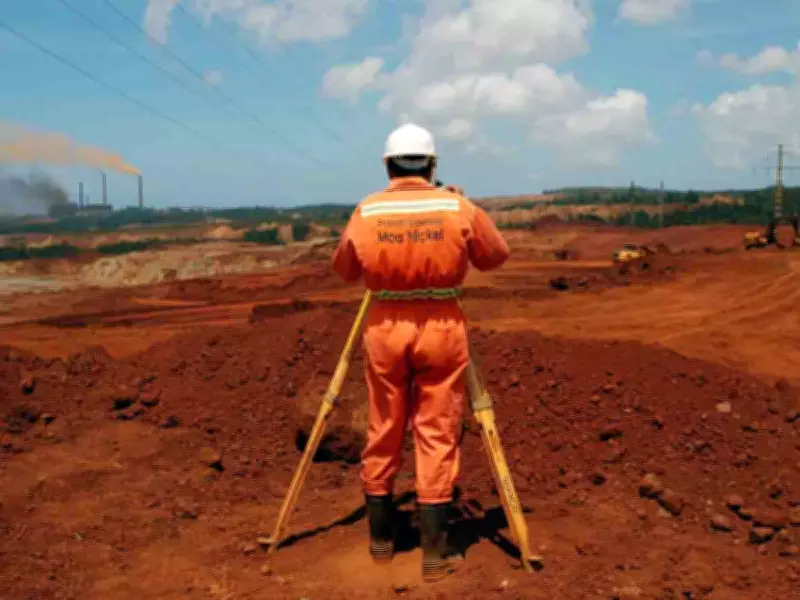
The Trump administration's hard line against Cuba pushed Sherritt International Corp. to the brink. Now, an ex-adviser to the United States president may be the Canadian mining company's salvation.
Sherritt's Cuban Gamble
The nearly 99-year-old company, whose former chief executive was once known as Fidel Castro's favourite capitalist, has staked its business on a bet few Western companies would touch. After entering Cuba in the 1990s, Sherritt developed a nickel-and-cobalt mine through a joint venture with the state before expanding into energy. The result was a sprawling business that has survived commodity busts, U.S. political pressure and economic instability on the island.
That wager abruptly unravelled this month, plunging Sherritt into turmoil. After President Donald Trump expanded sanctions on the communist country, Sherritt initially announced plans to dissolve its mining venture in Cuba. On Wednesday the U.S. charged former Cuban president Raúl Castro with murder, sharply escalating a standoff with Havana as the Trump administration attempts to reshape the island's political order.

Rescue from a Trump Ally
But just days after Sherritt announced its retreat from Cuba, a potential rescuer emerged in the form of a Dallas family office linked to Ray Washburne, a real estate executive appointed by Trump in 2017 to lead the Overseas Private Investment Corp. Washburne's Gillon Capital LLC signed a non-binding preliminary agreement on Wednesday that would hand the family office a controlling stake in Sherritt.
"It came out of nowhere," Peter Hancock, Sherritt's interim chief executive, said in an interview. "I would like to tell you that I am a business genius and that I knew an American entity would see that it could create value in the situation that Sherritt was in. But no, I did not foresee that."
As Trump's foreign policy during his second term turns markedly more aggressive, Sherritt is still at risk of losing its Havana gamble. The saga underscores the dangers facing companies and investors from shifting geopolitics amid a rapidly changing world order. While major multinational firms have not been immune to conflict-driven losses, the threat is particularly acute for companies with assets concentrated in a single country outside of the U.S.
Uncertain Path Forward
It is not clear whether Sherritt's preliminary pact with Gillon signals a potential shift in Trump's Cuba strategy. On Wednesday, he played down the need to further ratchet up pressure on the Cuban government after the charges against Raúl Castro. Representatives for Gillon and the State Department did not immediately respond to requests for comment.
But for Hancock, the sudden backing from Gillon helped "bridge the huge gap" between Sherritt and the administration.
"This deal happened because an actor in the United States was able to make a case to the U.S. State Department," he said. "We were collateral damage in a larger policy objective for the United States."