

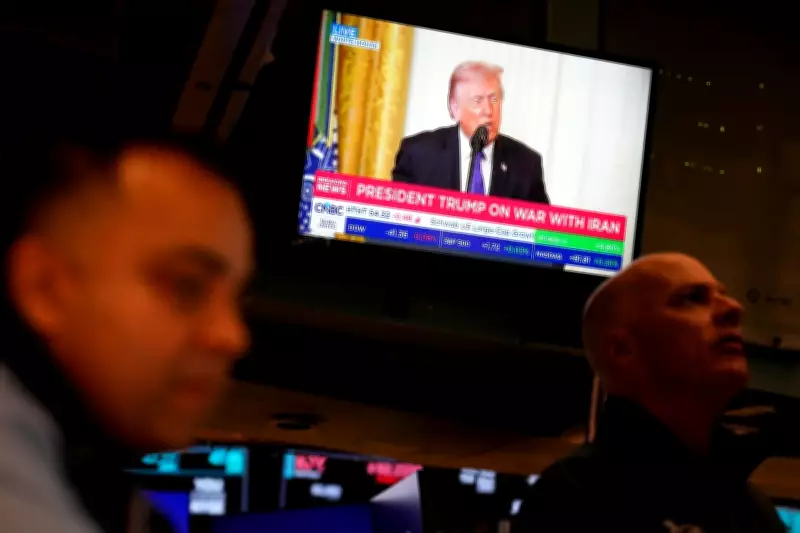
Market Optimism Surges with Prospect of Renewed U.S.-Iran Dialogue
In a notable turn of events, global stock markets exhibited significant gains while international oil prices experienced a downward adjustment on Monday, April 14, 2026. This financial movement is primarily attributed to growing investor confidence surrounding the potential resumption of diplomatic negotiations between the United States and Iran. Market analysts observed a palpable sense of relief spreading through trading floors, as the specter of reduced geopolitical friction in a key oil-producing region offered a reprieve from recent volatility.
Financial Indicators Respond to Diplomatic Signals
The Dow Jones Industrial Average, along with other major indices, opened higher and maintained momentum throughout the morning trading session. Concurrently, benchmark crude oil contracts, including Brent and West Texas Intermediate (WTI), traded lower. This inverse relationship between equity performance and energy costs is a classic market reaction to news that could stabilize Middle Eastern supply chains and ease inflationary pressures linked to energy.
"The market is breathing a tentative sigh of relief," noted a senior economist from a leading financial institution. "Any step toward de-escalation between Washington and Tehran is immediately priced in as a positive for global growth prospects and corporate earnings, particularly for sectors sensitive to fuel and transportation costs."

Context of Economic and Political Backdrop
This financial shift occurs against a complex backdrop. The International Monetary Fund (IMF) recently revised its global growth forecasts downward, citing economic fallout from ongoing conflicts. Furthermore, domestic policy announcements, such as the Canadian federal government's plan to temporarily suspend the gas tax, highlight the interconnected nature of geopolitical events and local economic measures. The hopeful sentiment regarding U.S.-Iran talks provides a counter-narrative to prevailing concerns about inflation and supply chain disruptions that have dominated business headlines.
Key factors influencing the current market sentiment include:
- Reduced Risk Premium: The potential for dialogue lowers the immediate risk of supply disruptions from the Persian Gulf, a critical transit route for global oil.
- Investor Psychology: Markets are forward-looking, and even the prospect of talks can trigger a rally as investors anticipate a more stable operating environment.
- Sectoral Impact: Airlines, transportation, and consumer discretionary stocks often benefit from lower fuel price expectations.
While the initial market reaction is positive, experts caution that the situation remains fluid. The path of any potential negotiations is uncertain, and historical tensions between the nations suggest that progress may be slow and susceptible to setbacks. Traders will be closely monitoring official statements from both capitals for concrete signs of a scheduled meeting or agreed-upon framework.
In summary, the financial world has responded with cautious optimism to the renewed possibility of U.S.-Iran talks. This episode underscores how diplomatic developments can swiftly translate into tangible movements across stock exchanges and commodity markets, offering a temporary uplift in a climate of broader economic uncertainty.






