Saskatoon's MEE Sports: A Sparkling Success in Competitive Cheerleading Apparel
In an unassuming building on First Avenue in Saskatoon, a dedicated team meticulously crafts the glittering uniforms that have made MEE Sports a go-to supplier for competitive cheerleading across North America. Specializing in a particularly sparkly niche, this Saskatchewan-based clothing factory has navigated challenges to lead the way in domestic garment manufacturing.
The Rhinestone Revolution
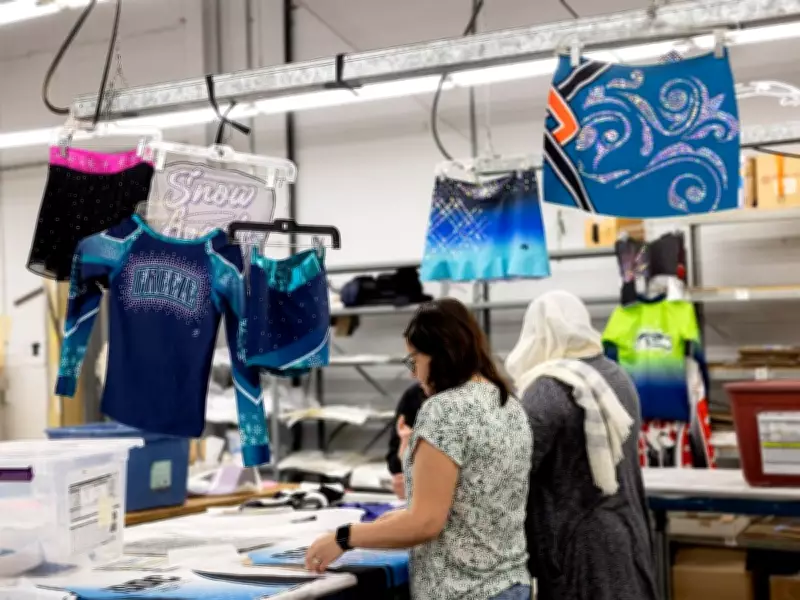
At the heart of MEE Sports' operation is a room dedicated to rhinestone quality control, where employees like Lil Stuart use tweezers to ensure every detail meets exacting standards. "Rhinestone quality control. There, I have a title," Stuart says as she carefully removes crushed stones and replaces those missed by automated processes. This attention to detail transforms backward, sticky-side-up rhinestone overlays into dazzling components of cheerleading uniforms that eventually grace NFL sidelines and competition stages.
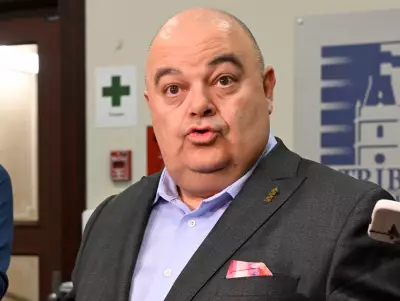
Founded by Harvey Viteychuk and his brother in 1987, MEE Sports has evolved from producing gym wear during the neon craze to becoming a premier source for competitive cheerleading warm-up gear and uniforms. The company now employs about 50 people in Saskatoon, maintaining a largely in-house production line that represents a rarity on the prairies.

Customization as Competitive Edge
"We can customize it to a company's pantone colour," Viteychuk emphasizes, highlighting how unique customization sets his products apart in a market flooded with generic imports. When Canada's import quota system was eliminated in the early 2000s, MEE Sports pivoted toward women-specific products, capitalizing on demand for specialty colors like purples, turquoises, and pinks that weren't widely available from overseas manufacturers.
The company's client roster now includes NFL cheer teams for the Denver Broncos, Kansas City Chiefs, and Tennessee Titans, along with Canadian cheer clubs like the Hilltops and Prairie Fire. Despite pandemic challenges that led to a 2023 merger with B.C.-based distributor Total Spirit, MEE Sports has maintained its commitment to quality and customization.
The Manufacturing Process: Technology Meets Craftsmanship
The journey from design to finished garment involves multiple sophisticated steps:
- Pattern maker Muhammad Zubair transforms customer-approved mock-ups into scalable patterns using 3D design software
- Graphic designer Viv Tang scales patterns to standard clothing sizes and prepares colorful designs for printing
- Special paper printouts undergo sublimation, where ink transforms from solid to gas under pressure to bond with polyester fibers
- Human employees then embellish garments with appliqués and complete sewing by hand
"To stay in this kind of business in North America is really tough," Viteychuk acknowledges. "We've had to constantly adopt new technology. I'm not saying we're leading it, but we're definitely not behind." Yet he emphasizes that some elements resist automation: "AI is not going to be replacing this," he says as employees carefully assemble garments.
Economic Realities and Strategic Adaptation
The economics of domestic manufacturing have shifted dramatically since MEE Sports' founding. "When we started, labour accounted for about a quarter of our costs, with materials making up the rest," Viteychuk explains. "Now it's about 75 to 80 percent labour and 20 to 25 percent materials." This reversal means each piece produced in Saskatoon must turn a profit, leading to strategic decisions about which products to manufacture locally versus through overseas partners.
For complex designs like Prairie Fire uniforms featuring multiple mesh panels and intricate details, MEE Sports partners with manufacturers in China. Simpler uniforms for younger athletes continue to be produced in Saskatoon. Prairie Fire co-owner Taylor Dea notes that midrange uniforms cost about $400 and are used for three seasons, with convenience, competitive pricing, and shared values making MEE Sports attractive despite overseas alternatives.

Building a Brand Beyond Borders
Developing an international reputation has been crucial to MEE Sports' success. After being invited to the NFL Cheerleading Directors Conference in 2011, the company's sublimation-made products attracted significant interest. Raija McCallen, who attended the conference for the first time in 2024, emphasizes the company's commitment to service: "It's a level of service that we strive to provide. We're very attentive and want to make clients feel like they're VIP."
The 2023 merger with Total Spirit has expanded production scale while maintaining Saskatoon manufacturing. "We've been having to do a lot of building just to maintain our domestic production," Viteychuk notes about the post-merger expansion.
A Rare Success in Saskatchewan Fashion
Mandy Pravda, president and co-founder of the Saskatchewan Fashion Association, describes MEE Sports as particularly exceptional in a provincial fashion sector characterized by independent designers working with limited resources. A 2021 report prepared for the association highlighted challenges including limited funding, affordable manufacturing access, qualified labour shortages, and changing consumer habits.
"The key challenge is finding the brand," Pravda observes. "Harvey's seen a niche in sports, and the need for unique clothing in the cheerleading line. He recognized that maybe the opportunity wasn't as vast in Canada, and he was able to tap into the U.S. market. He expanded on an international level due to his niche market and his brand."
Through technological adaptation, strategic partnerships, and unwavering commitment to quality and customization, MEE Sports continues to sparkle as a Saskatchewan success story in the competitive world of cheerleading apparel.