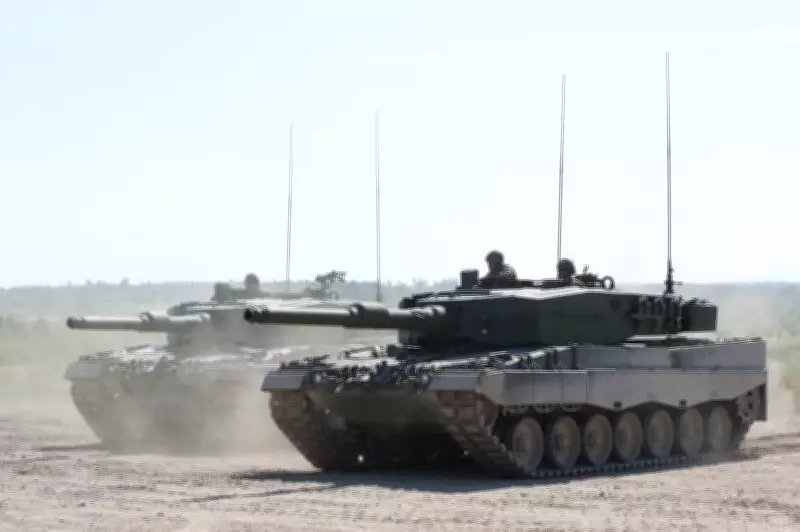
The Canadian government has formally asked the defence industry to provide options for replacing the country's aging fleet of Leopard 2 tanks, signaling a major step toward modernizing the army's armored capabilities. The request, issued by the Department of National Defence, seeks detailed proposals from manufacturers on potential replacement systems that could meet Canada's future operational requirements.
Background on the Current Tank Fleet
Canada currently operates a fleet of Leopard 2A4 and Leopard 2A6M tanks, which were acquired from the Netherlands and Germany in the late 2000s and early 2010s. These tanks have been deployed in various missions, including in Afghanistan and Latvia as part of NATO's enhanced Forward Presence. However, many of these vehicles are now approaching the end of their service life, with maintenance costs rising and parts becoming increasingly difficult to source.
Industry Engagement and Timeline
The request for information (RFI) is the first formal step in a procurement process that could eventually lead to a contract worth billions of dollars. Defence industry analysts expect major global manufacturers such as Germany's Krauss-Maffei Wegmann, South Korea's Hyundai Rotem, and the United States' General Dynamics to submit proposals. The government has indicated that it aims to make a final decision by 2028, with deliveries beginning in the early 2030s.

Key requirements outlined in the RFI include improved protection, mobility, and firepower, as well as advanced networking and situational awareness capabilities. The new tanks must also be interoperable with allied forces, particularly those of NATO members.
Strategic Implications
The tank replacement program comes amid heightened geopolitical tensions and a renewed focus on conventional deterrence in Europe. Canada's commitment to NATO has been underscored by its deployment of a battle group in Latvia, where tanks play a crucial role in defensive operations. A modernized tank fleet would enhance Canada's ability to contribute to collective defense and project power in support of international alliances.
Furthermore, the procurement is expected to bolster the Canadian defence industry through potential industrial participation agreements, which could involve domestic manufacturing, assembly, or maintenance work. This aligns with the government's policy of leveraging defence spending to support economic growth and technological innovation.
Challenges and Considerations
While the RFI marks progress, the program faces several challenges. Budgetary constraints, given the federal government's fiscal situation, may limit the number of tanks purchased. Additionally, the timeline for delivery must account for the complexity of modern tank production, which can take years from contract signing to fielding. There is also the question of whether Canada will opt for an off-the-shelf solution or seek a customized design, which could affect costs and delivery schedules.
Environmental considerations are also emerging, as new tank designs may incorporate hybrid or electric drivetrains to reduce fuel consumption and emissions, aligning with broader sustainability goals within the military.
Next Steps
The defence industry has until September 2026 to respond to the RFI. Following evaluation of the submissions, the government will issue a formal request for proposals (RFP) in 2027. Industry observers expect a competitive bidding process, with potential partnerships between foreign manufacturers and Canadian firms to meet local content requirements.
In the interim, the Canadian Army will continue to sustain its existing Leopard 2 fleet through upgrades and life-extension programs to ensure operational readiness until the new tanks are delivered.