

Oil Prices Stabilize While Asian Stocks Mostly Decline Amid Mixed Iran Signals
Global financial markets exhibited a cautious stance on Tuesday, March 31, 2026, as oil prices steadied and Asian stocks trended mostly lower. This movement comes in response to mixed geopolitical signals emanating from Iran, creating uncertainty among investors and traders worldwide.
Market Movements and Geopolitical Influences
Oil markets saw a period of stabilization after recent volatility, with prices holding firm despite ongoing tensions. This steadiness contrasts with the broader equity landscape in Asia, where stock indices predominantly recorded losses. The mixed signals from Iran, involving diplomatic and security developments, have injected a layer of unpredictability into market sentiment, prompting investors to adopt a more defensive posture.
Asian Equity Performance
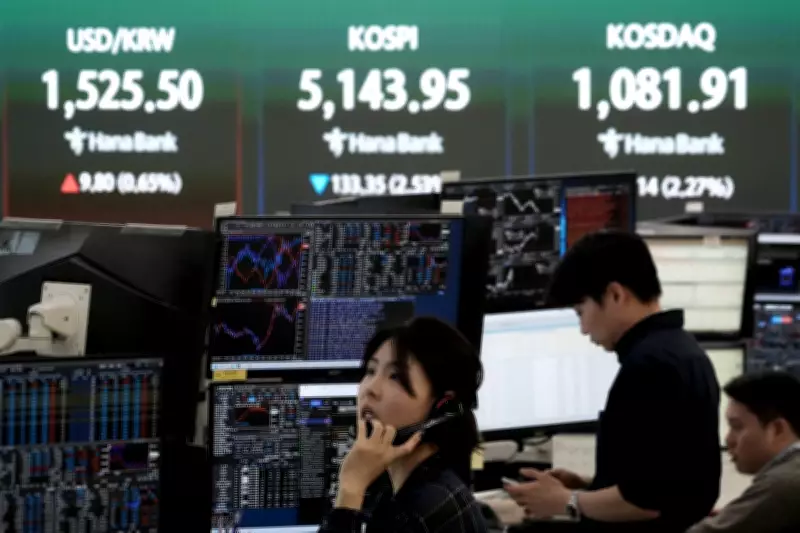
Across the Asia-Pacific region, stock markets reflected this unease. Key indices such as Japan's Nikkei and South Korea's KOSPI experienced declines, while some markets showed marginal gains or flat performance. The foreign exchange dealing rooms, like that at Hana Bank headquarters in Seoul, were abuzz with activity as traders monitored currency fluctuations alongside stock movements, particularly the exchange rate between the U.S. dollar and the South Korean won.

Analysts attribute this trend to a combination of factors:
- Geopolitical risks linked to Iran's actions and international responses.
- Concerns over global economic growth and inflation pressures.
- Shifts in investor risk appetite amid uncertain policy directions.
Broader Economic Context
The market dynamics occur against a backdrop of varied economic news. In the energy sector, oil's stabilization suggests a temporary balance between supply concerns and demand projections. Meanwhile, the dip in Asian equities highlights regional vulnerabilities to external shocks, including geopolitical events and global monetary policy adjustments.
Financial experts note that such mixed signals often lead to heightened volatility, as markets digest conflicting information and adjust to new realities. The situation underscores the interconnectedness of global economies, where developments in one region can swiftly impact others.
Outlook and Implications
Looking ahead, market participants will closely watch for further clarity on Iran-related developments, as well as key economic data releases. The stabilization in oil prices may provide some relief to energy-dependent industries, but persistent stock market declines could signal broader economic caution.
In summary, the trading session highlighted a delicate balance in global markets, with oil finding footing while Asian stocks faced downward pressure, all shaped by the ambiguous signals from Iran. This scenario reinforces the need for investors to stay informed and agile in navigating complex geopolitical landscapes.






