

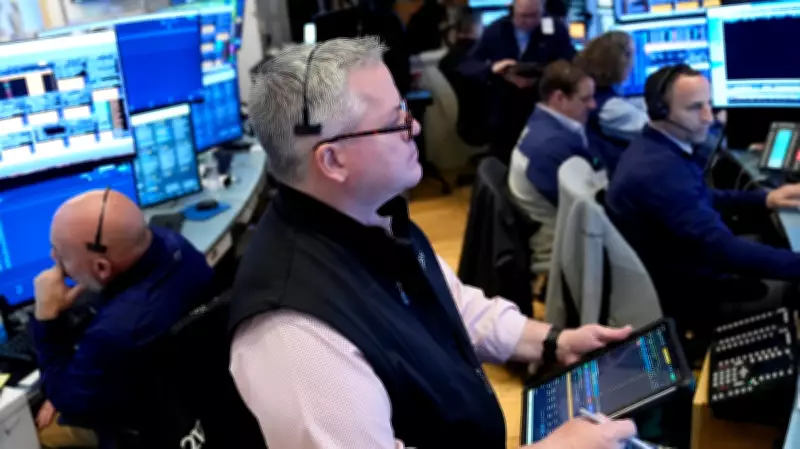
Oil prices plummeted more than 13% on Friday, while U.S. stock markets raced toward new record highs after Iran announced the reopening of the Strait of Hormuz to oil tankers. This critical passageway for crude shipments from the Persian Gulf had been a focal point of geopolitical tension, and its reopening signals a potential de-escalation in the ongoing conflict between the United States and Iran.
Market Rally Gains Momentum
The S&P 500 index leaped 1.4% as Wall Street rallied toward the finish of its third consecutive week of substantial gains, marking the longest such streak since Halloween. The Dow Jones Industrial Average surged by 1,061 points, or 2.2%, as of 10:50 a.m. Eastern time, while the Nasdaq composite climbed 1.6% higher. This impressive rally reflects growing investor optimism that a worst-case scenario for the global economy might be avoided.
Immediate Impact on Oil Prices
The price for a barrel of benchmark U.S. crude oil plunged immediately following a social media post by Iran's Foreign Minister, Abbas Araghchi. He declared the strait "completely open" for all commercial vessels, citing a ceasefire holding in Lebanon. U.S. oil tumbled 13% to $79.31 per barrel, while Brent crude, the international standard, dropped 13.4% to $86.11 per barrel. Despite this sharp decline, prices remain above pre-war levels of around $70, indicating that some caution persists in financial markets.

Broader Economic Implications
A freer flow of oil through the Strait of Hormuz is expected to alleviate pressure on inflation, which has been a global concern. This development could benefit consumers by reducing gasoline prices and easing costs for businesses reliant on fuel. The bond market reacted positively, with the yield on the 10-year Treasury dropping to 4.22% from 4.32% late Thursday. Lower Treasury yields typically lead to reduced rates for mortgages and other loans, providing relief to households and companies.
Sector-Specific Gains
Companies with significant fuel expenses soared following the easing of oil prices. United Airlines surged 11.2%, while cruise operators like Norwegian Cruise Line jumped 10.5% and Royal Caribbean Group gained 10.4%. Housing and automotive sectors also benefited, with Builders FirstSource rising 9.6%, homebuilder Lennar gaining 7.1%, and Carvana climbing 9% on hopes that lower loan rates would stimulate demand.
Earnings Season Support
A strong start to the earnings reporting season for major U.S. companies has further bolstered the stock market. Several financial institutions reported better-than-expected profits for the latest quarter, with State Street rising 3.6% and Fifth Third Bancorp adding 2.1%. However, Netflix fell 8.9% despite delivering a profit beat, as it did not raise its full-year revenue growth forecast and announced that cofounder Reed Hastings will step down from its board in June.
Global Market Reactions
In Europe, stock indexes leaped following Iran's announcement, with France's CAC 40 jumping 2.2% and Germany's DAX returning 2.5%. In Asia, where trading concluded before the news, indexes were weaker, with Japan's Nikkei 225 losing 1.8% and Hong Kong's Hang Seng falling 0.9%.
Political and Strategic Context
President Donald Trump commented late Thursday that the war "should be ending pretty soon," adding to market optimism. However, he also noted that the U.S. Navy's blockade of Iran remains "in full force" until a deal is reached, emphasizing that negotiations are progressing quickly. This mixed messaging highlights the volatility that has characterized markets since the conflict began, with optimism often swinging to doubt and causing sudden price swings across assets.
The reopening of the Strait of Hormuz, while potentially temporary, represents the clearest signal yet for a peaceful resolution. As the situation continues to evolve, investors remain cautiously hopeful that sustained stability could further support economic recovery and market growth.






