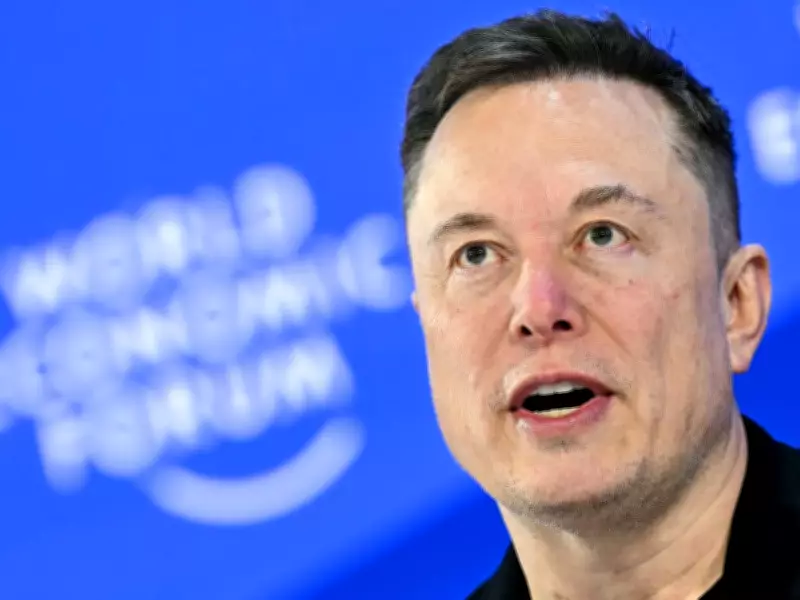
Elon Musk's Audacious Merger Creates $1.25 Trillion Private Giant
In a move that has stunned the business world, Elon Musk has executed one of the most daring deals of his career by merging SpaceX with his artificial intelligence startup xAI. This strategic combination has birthed the most valuable private company in history, valued at a staggering US$1.25 trillion. The merger effectively folds Musk's dominant rocket manufacturing enterprise into the currently loss-making AI venture, alongside the social media platform X.
A Vision for Space-Based AI and Interplanetary Ambitions
Musk has publicly framed this consolidation as a necessary step to realize his grand technological visions. He outlined plans to launch advanced data centers into space, establish manufacturing facilities on the moon, and ultimately support the colonization of Mars. Supporters of the deal hail it as a masterstroke of vertical integration, leveraging SpaceX's reusable rocket technology and the global Starlink satellite network. This infrastructure, combined with the vast data streams from platform X and the AI models developed by xAI, is seen as creating an unparalleled technological ecosystem.
Financial Engineering or Strategic Genius?
The merger has sparked intense debate among investors and analysts. Critics view it as a prime example of financial engineering, suggesting Musk is using the robust valuation and cash flow of SpaceX to bolster xAI, which is reportedly burning through approximately US$1 billion in cash each month. Skeptics question the fundamental valuations underpinning the deal. "None of the valuations are based on any rational multiple," commented one xAI investor to the Financial Times. "They're all trading off Elon."

Conversely, proponents argue it is a visionary alignment of complementary assets. Sol Bier, founder of Factorial Funds, an investor in both companies, stated, "This merger is a testament to great engineering. Space, data centers, solar power—looking back, those are discrete businesses. Looking ahead, they're on a collision course. AI's bottleneck is energy and Elon just vertically integrated the solution."
Deal Mechanics and Investor Surprise
The formal merger negotiations, which leaked last week, proceeded with remarkable speed, catching many shareholders off guard. According to multiple sources, most investors were kept in the dark until the deal was nearly finalized. SpaceX Chief Financial Officer Bret Johnsen and xAI's Jared Birchall conducted hurried briefing calls with investors, which were reportedly plagued by delays and poor audio quality, leaving many struggling to grasp the scant details.
The deal's structure involves SpaceX acquiring xAI for US$250 billion, a figure that aligns with a recent US$20 billion funding round that valued the two-year-old AI startup at US$230 billion. Shares of xAI will be converted into SpaceX stock at an exchange rate of roughly seven to one, with the combined entity's stock priced at US$527 per share. Musk also unilaterally marked up SpaceX's private valuation to US$1 trillion, citing increased revenue projections from the Starlink broadband service—a US$200 billion increase from its valuation in a secondary stock sale just last December.
Path Forward and Speculation on a Tesla Merger
During the investor calls, Birchall confirmed that Elon Musk will lead the newly combined entity, with the deal set to officially close on March 16. Investors were given the option to cash out their xAI holdings rather than convert them into SpaceX stock. Furthermore, the company is still targeting an initial public offering (IPO) in June. Musk has reportedly pushed for this timing due to a rare astrological alignment of Jupiter, Venus, and Mercury occurring that month.
This monumental deal has now ignited widespread speculation about Musk's next strategic move. Following Tesla's own US$2 billion investment in xAI last week, market observers are actively debating the possibility of an eventual merger between the electric vehicle giant and this new aerospace-AI colossus, potentially creating an even more formidable corporate entity under Musk's control.