Markets Bet on Trump to Swiftly End Iran War Despite Escalating Threats
Financial markets are signaling a strong belief that a potential second Trump administration would move quickly to de-escalate the ongoing conflict with Iran, even as rhetoric and military posturing from both nations continue to intensify. This market sentiment comes amid volatile trading, particularly in oil futures, which have experienced sharp swings based on geopolitical headlines.
Oil Prices Whipsaw on War Uncertainty
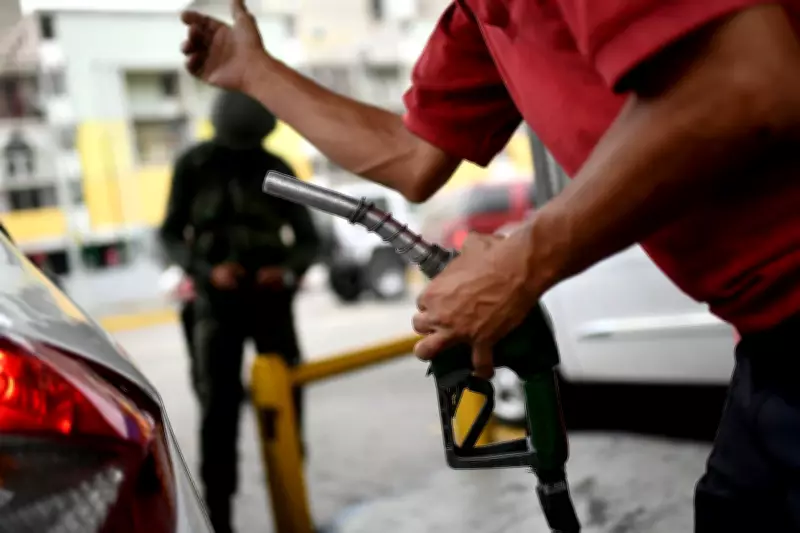
The price of crude oil has been hovering around the $100 per barrel mark, with significant impacts being felt by consumers globally. Recent sessions have seen dramatic volatility, with prices briefly spiking toward $120 before falling back below $90, reflecting the market's hypersensitivity to developments in the Persian Gulf. Analysts note that the conflict is already expected to impact the cost of farming operations and groceries, adding inflationary pressure to supply chains.
Political Landscape and Market Psychology
The market's positioning appears to be a direct bet on the foreign policy approach of former President Donald Trump, who is seen by many traders as more likely to pursue a rapid negotiated settlement rather than a prolonged military engagement. This contrasts with current escalatory threats exchanged between Iranian leadership and the U.S. and its allies. The assumption is that a Trump administration would prioritize a deal that stabilizes energy markets, a cornerstone of his previous economic focus.

This market view persists despite no clear public commitment from Trump regarding a specific Iran peace plan. Instead, it seems rooted in his first-term actions and recent ambiguous statements, such as his comment on Cuba that it may or may not be a "friendly takeover," which traders interpret as a preference for unconventional diplomatic solutions over sustained warfare.
Broader Economic and Political Repercussions
The Iran situation is dominating political discourse as well. In Canada, Conservative Leader Pierre Poilievre recently called out Prime Minister Mark Carney for his absence during a parliamentary debate on the Iran war, highlighting the conflict's resonance in allied nations. Meanwhile, automakers have been granted increased tariff-free access to the U.S. market due to higher Canadian production, a minor economic bright spot amidst the geopolitical gloom.
From a defense perspective, PM Carney is scheduled to travel to Norway to observe NATO exercises and meet with the Norwegian prime minister, underscoring the alliance's coordinated response to global instability. The war's effects are far-reaching, with firms like Anthropic suing the Trump administration to reverse a 'supply chain risk' designation, illustrating how geopolitical risk is translating into legal and corporate challenges.
Volatility as the New Normal
For now, traders are navigating a landscape where every headline can trigger a multi-dollar move in oil. The core market thesis—that Trump will end the war soon—provides a floor of optimism, but it remains fragile. Any significant escalation on the ground could shatter this confidence instantly, leading to another spike in energy prices and broader market panic. The coming weeks will be critical in determining whether market psychology or military reality prevails in the high-stakes standoff with Iran.