

Global Markets Tumble as Oil Prices Surge on Iran Conflict Fears
Global financial markets faced a sharp downturn on Monday, March 30, 2026, as escalating geopolitical tensions in Iran sent oil prices soaring, triggering widespread investor anxiety. The surge in crude oil benchmarks rattled equity markets worldwide, reflecting deep concerns about potential supply disruptions and broader economic instability.
Market Reactions and Investor Sentiment
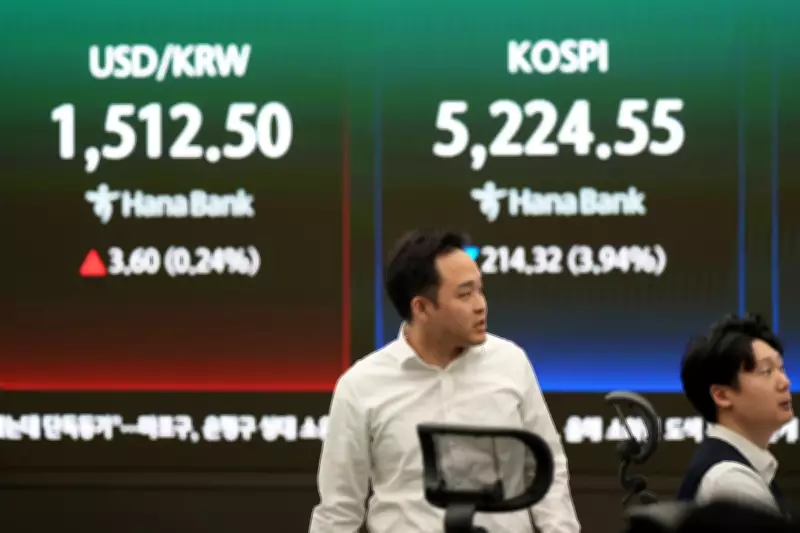
Dealers at Hana Bank in Seoul, South Korea, were observed working intently near screens displaying the Korea Composite Stock Price Index (KOSPI) and foreign exchange rates, as markets reacted to the volatile situation. The palpable tension in dealing rooms underscored the immediate impact of geopolitical risks on financial instruments, with many investors shifting to safer assets amid the uncertainty.
The rapid increase in oil prices has historically acted as a drag on global economic growth, raising fears of inflationary pressures and reduced consumer spending. Analysts note that such spikes can particularly affect energy-dependent industries and emerging markets, which are more vulnerable to commodity price shocks.

Broader Economic Implications
Beyond the immediate market movements, the situation highlights the fragile interdependence of global economies and energy markets. Escalating conflicts in key oil-producing regions like Iran pose significant threats to international trade flows and supply chains, potentially leading to prolonged economic headwinds.
Financial experts are closely monitoring several critical factors:
- The duration and intensity of the geopolitical tensions
- Potential responses from major oil-consuming nations
- Impacts on global inflation and interest rate policies
- Effects on corporate earnings and investment strategies
As markets continue to digest these developments, the focus remains on diplomatic efforts to de-escalate the situation. However, the uncertainty has already injected a note of caution into financial planning and risk assessments across sectors.
The events of March 30 serve as a stark reminder of how swiftly geopolitical events can translate into financial market volatility, underscoring the need for robust risk management frameworks in an increasingly interconnected world economy.






