

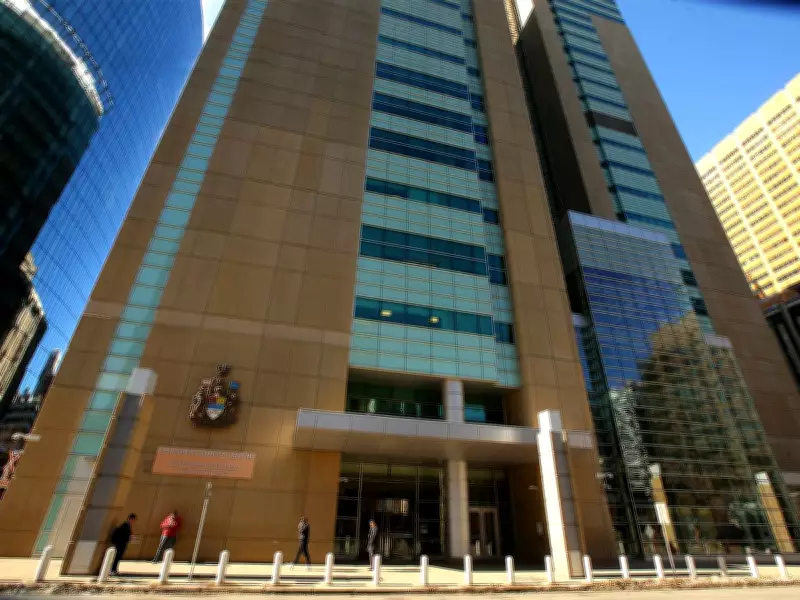
Calgary Court Upholds Profit Withholding Under Russian Sanctions
In a significant legal decision, a Calgary judge has ruled that a local oil and gas company is justified in withholding profits from its British Columbia partner due to Canadian sanctions imposed against Russia following its invasion of Ukraine. Justice Paul Jeffrey delivered the written ruling, which underscores the far-reaching implications of international sanctions on corporate operations within Canada.
Sanctions Apply Due to Russian Government Links
Justice Paul Jeffrey determined that RN Cardium Oil Inc.'s connections to a Russian government-owned entity render it subject to Canada's stringent sanctions regime. This finding has profound consequences for the company's financial dealings and partnerships across provincial lines.
The Calgary Court of King's Bench judge dismissed Cardium's lawsuit against Loyal Energy (Canada) Operating Ltd., which had ceased payments covering the B.C. company's 30 percent interest in a joint hydrocarbon venture. The legal dispute centers on whether Loyal Energy's actions constitute a breach of contract or a necessary compliance with federal sanctions.

Background of the Joint Venture
Cardium and Loyal entered into a collaborative agreement to develop wells for hydrocarbon production and sales. Under this arrangement, Cardium was entitled to 30 percent of the revenues, while Loyal, as the operator, received the remaining 70 percent of profits. Since assuming the operator role in 2020, Loyal had consistently paid Cardium its share on a quarterly basis.
However, payments halted abruptly in November 2022. Despite repeated requests from Cardium for the owed funds, Loyal has retained the cash, citing legal constraints imposed by sanctions. In a communication dated February 21, 2023, Loyal informed Cardium that it could no longer make payments "due to ... the sanctions regulations."
Ongoing Production Without Payment
Justice Jeffrey noted that Loyal has continued hydrocarbon production from the jointly owned wells but has refrained from disbursing Cardium's 30 percent share. Loyal maintains that it continues to account for Cardium's portion of all production revenue, cover associated costs and expenses, and hold the funds in reserve. However, these funds will only be released "if and when permitted by law."
In response, Cardium filed a lawsuit on March 17, 2025, alleging breach of contract and seeking damages totaling $6 million, plus a punitive award of $60 million. Loyal does not dispute suspending payments but argues it was legally prohibited from doing so under the joint venture development agreement.
Russian Ownership and Sanction Implications
The Canadian sanctions laws aim to freeze assets of "individuals and entities supporting or enabling Russia's violation of Ukraine's sovereignty." These regulations list specific corporations and include entities owned, held, or controlled by Russia. Among them is JSC Rosneftegaz, a company managing assets in the oil and gas sector.
Despite being based in British Columbia, Cardium cannot evade its Russian affiliations. Justice Jeffrey highlighted that "Cardium is a wholly owned subsidiary of PJSC Rosneft Oil Company," with Rosneft's controlling shareholder being Rosneftegaz, which is itself wholly owned by Russia. This ownership structure firmly places Cardium within the scope of the sanctions.
Legal and Business Ramifications
This ruling sets a precedent for how Canadian companies must navigate partnerships involving entities linked to sanctioned nations. It emphasizes the legal obligations businesses face under international sanctions, even when operating across provincial boundaries. The decision also raises questions about the future of joint ventures in industries impacted by geopolitical tensions.
As sanctions continue to evolve, companies engaged in international or cross-provincial ventures must diligently assess their ownership structures and partnerships to ensure compliance. This case serves as a stark reminder of the legal and financial risks associated with entities connected to sanctioned regimes.






