

Asian Markets Exhibit Mixed Signals as Oil Prices Retreat Following Wall Street's Record Surge
Financial markets across Asia presented a varied picture on Thursday, with indices fluctuating as investors reacted to Wall Street's latest milestone. The backdrop of renewed hopes for ceasefire agreements in ongoing international conflicts fueled optimism, leading to a notable surge in U.S. equities. This positive sentiment, however, did not uniformly translate to Asian exchanges, resulting in a patchwork of gains and losses.
Wall Street Sets Another Record High on Geopolitical Optimism
In the United States, stock markets climbed to fresh record levels, driven by growing anticipation that diplomatic efforts could lead to ceasefires in several global hotspots. This bullish momentum reflected investor confidence that reduced geopolitical tensions might stabilize global trade and economic growth. The rally underscored how market sentiment can swiftly pivot on news of potential peace breakthroughs, overshadowing other economic indicators temporarily.
Asian Markets Respond with Caution and Divergence
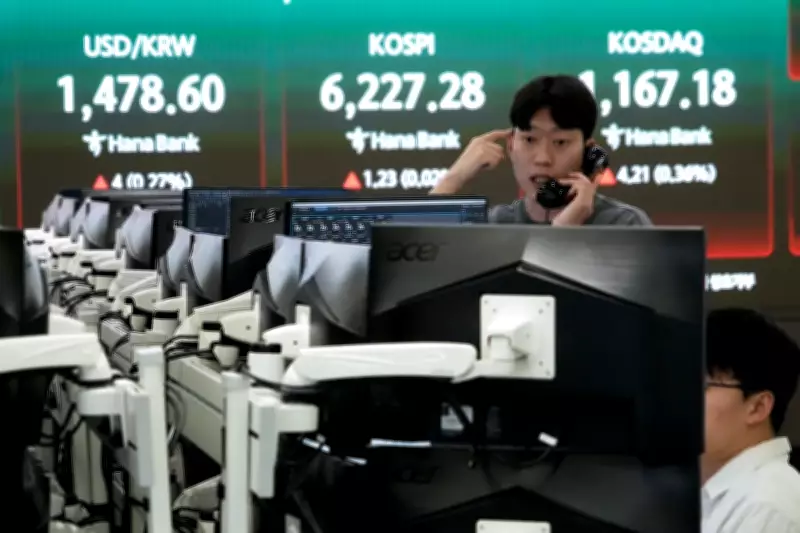
Across the Asia-Pacific region, the reaction was more measured. Key indices such as Japan's Nikkei and South Korea's KOSPI showed modest movements, with some sectors advancing while others retreated. Traders in financial hubs like Seoul monitored currency fluctuations closely, as seen in foreign exchange dealing rooms where screens displayed real-time data on the U.S. dollar and South Korean won. The mixed performance highlighted regional uncertainties, including local economic data and corporate earnings reports that tempered the upbeat Wall Street influence.

Oil Prices Decline Amid Easing Supply Concerns
Concurrently, oil markets experienced a downturn, with prices falling in response to the same ceasefire hopes that buoyed stocks. The prospect of reduced conflict in oil-producing regions alleviated fears of supply disruptions, prompting a sell-off in crude futures. This decline marked a shift from recent volatility, as traders recalibrated expectations based on the potential for more stable geopolitical conditions. Analysts noted that sustained peace efforts could further pressure oil prices, impacting energy sectors globally.
Broader Economic Context and Future Outlook
The day's market movements occurred against a backdrop of other news, including corporate developments and regional events, but the overarching theme was the impact of geopolitical news on financial assets. Investors remain vigilant, balancing optimism over ceasefire prospects with ongoing concerns about inflation, interest rates, and global economic health. As negotiations continue, markets are likely to remain sensitive to updates, with potential for further volatility in both equity and commodity arenas.
In summary, while Wall Street celebrated another record high on ceasefire hopes, Asian markets offered a more nuanced response, and oil prices retreated, illustrating the complex interplay between geopolitics and global finance.






