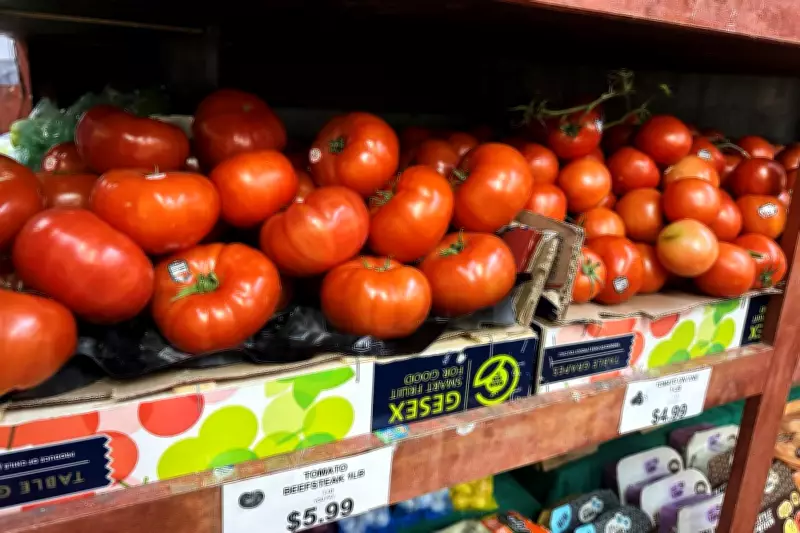
Tomatoes have become the latest emblem of America's affordability squeeze, as rising prices for the staple vegetable reflect broader inflationary pressures on household budgets. A recent photograph captured tomatoes awaiting customers on supermarket shelves in New York on Tuesday, May 26, 2026, underscoring the tangible impact of economic trends on everyday life.
Inflation Hits the Produce Aisle
The cost of tomatoes has surged in recent months, joining a growing list of goods that are straining consumers' wallets. According to data from the Bureau of Labor Statistics, tomato prices have increased by over 15% year-over-year, outpacing overall food inflation. This spike is attributed to a combination of factors, including adverse weather conditions in key growing regions, rising transportation costs, and supply chain disruptions.
Broader Economic Context
The tomato price hike is part of a larger trend of persistent inflation that has plagued the U.S. economy. While the Federal Reserve has implemented interest rate hikes to cool demand, prices for essentials like food and housing remain elevated. For many Americans, the affordability crisis is most acutely felt at the grocery store, where even basic items like tomatoes have become a luxury.

Consumer Reactions
Shoppers are adjusting their habits in response. Some are opting for canned or frozen alternatives, while others are cutting back on fresh produce altogether. Community gardens and farmers' markets have seen increased interest as people seek more affordable options. However, for low-income families, the impact is particularly severe, forcing difficult trade-offs between food and other necessities.
Expert Insights
Economists warn that the situation may not improve quickly. Supply chain issues, exacerbated by geopolitical tensions and climate change, continue to disrupt agricultural production. Dr. Emily Carter, an agricultural economist at Cornell University, notes: "The volatility we're seeing in tomato prices is a microcosm of a larger systemic problem. Without significant investment in resilient supply chains and sustainable farming practices, these price shocks will become more frequent."
Policy Responses
In response to growing public concern, policymakers are exploring measures to alleviate the burden. Proposals include expanding food assistance programs, investing in domestic agriculture, and cracking down on price gouging. However, with political divisions and budget constraints, meaningful action remains uncertain.
As tomatoes become a symbol of the affordability squeeze, their story reflects the challenges facing millions of Americans. The image of a simple vegetable carrying such weight speaks to the profound economic anxieties of our time.