

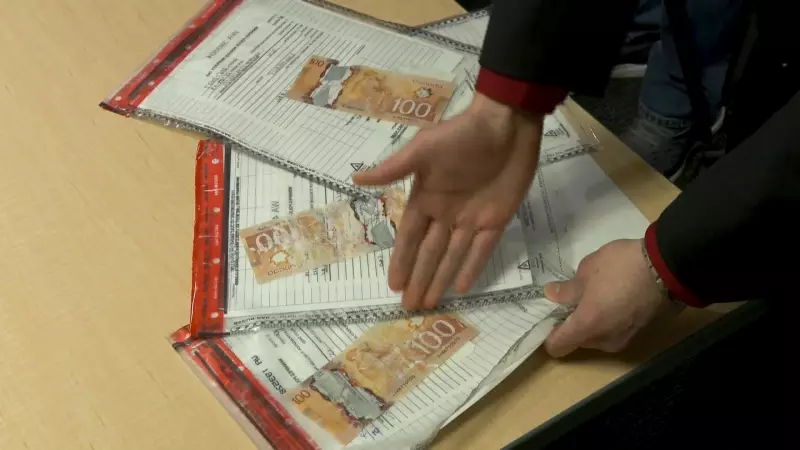
Police in Ontario are issuing a stark warning to businesses and consumers after a local company fell victim to a sophisticated counterfeit cash scam. The incident involved a criminal slipping $6,200 in fake Canadian currency past employees.
The Mechanics of a Modern Cash Scam
According to authorities, the scam unfolded when an individual presented a mix of counterfeit banknotes for payment or exchange. The fraudulent transaction was cleverly executed, allowing a significant sum of fake 20, 50, and 100-dollar bills to be accepted as genuine. This case highlights a troubling trend identified by law enforcement: while criminals have historically produced fake $20 and $50 notes, there is now a noticeable surge in counterfeit $100 bills entering circulation.
The precise location and name of the affected Ontario company have not been fully disclosed in the initial report, which was filed by journalist Pat Foran. However, the financial impact is clear and substantial, representing a direct hit to the business's bottom line and undermining trust in everyday cash transactions.

A Growing Threat to the Economy
This incident is not isolated. Police services across the province and the country are monitoring an increase in the quality and volume of counterfeit money being passed to unsuspecting retailers and individuals. The production of fake $100 bills, in particular, is concerning due to the higher value per note, enabling criminals to extract more money per successful transaction.
The consequences for businesses extend beyond the immediate financial loss. Accepting counterfeit money means the business absorbs the full cost, as financial institutions will not reimburse for fake notes. Furthermore, passing a counterfeit bill unknowingly can lead to complications if the money is later discovered during a bank deposit.
How to Protect Yourself and Your Business
In light of this scam, police and the Bank of Canada urge heightened vigilance. They recommend that both businesses and the public familiarize themselves with the security features on Canadian polymer banknotes. Key features to check include:
- The Large Transparent Window: A distinctive, clear area with complex metallic imagery.
- The Raised Ink: Feel for raised ink on the large number, the shoulders of the portrait, and the words "Bank of Canada."
- Metallic Imagery: Look for shiny, metallic symbols in the large window and on the edges of the note.
- The Hidden Number: Tilt the note to see numbers that match the denomination appear in the large window.
Businesses are advised to train staff, especially those handling cash, on these security features and to consider using counterfeit detection pens or ultraviolet lights at points of sale. For any suspicious activity or the discovery of counterfeit money, contact your local police service immediately. Do not return the fake notes to the passer.
The report on this Ontario scam serves as a critical reminder that even in an increasingly digital economy, physical currency fraud remains a persistent and evolving threat. Staying informed and cautious is the first line of defense for protecting hard-earned money.






