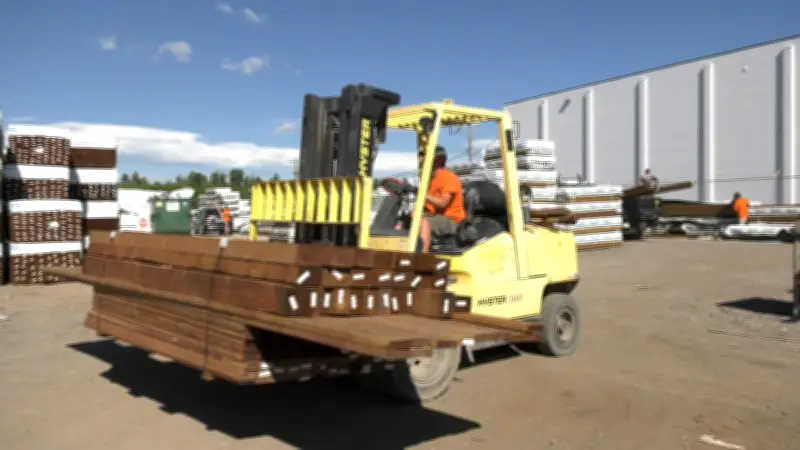
Lumber prices have dropped 65% off their COVID-era peaks, providing some relief to the construction industry, but the cost savings are being offset by gains in operating expenses, according to a recent analysis.
Price Decline and Operating Cost Increases
The sharp decline in lumber prices comes as supply chain disruptions ease and demand normalizes after the pandemic-driven surge. However, builders and manufacturers are facing higher costs for labor, transportation, and materials other than lumber.
“While the drop in lumber costs is welcome, it’s not a silver bullet,” said an industry analyst. “Operating expenses have risen significantly, eating into the savings.”

Impact on Construction Industry
The net effect is that overall construction costs remain elevated, putting pressure on homebuilders and renovators. The National Association of Home Builders reported that the cost of building a single-family home has increased by nearly 30% since 2020, despite the recent lumber price decline.
Experts say the operating cost increases are driven by factors such as higher wages, fuel prices, and insurance premiums. These costs are expected to persist in the near term, limiting the benefit of lower lumber prices.