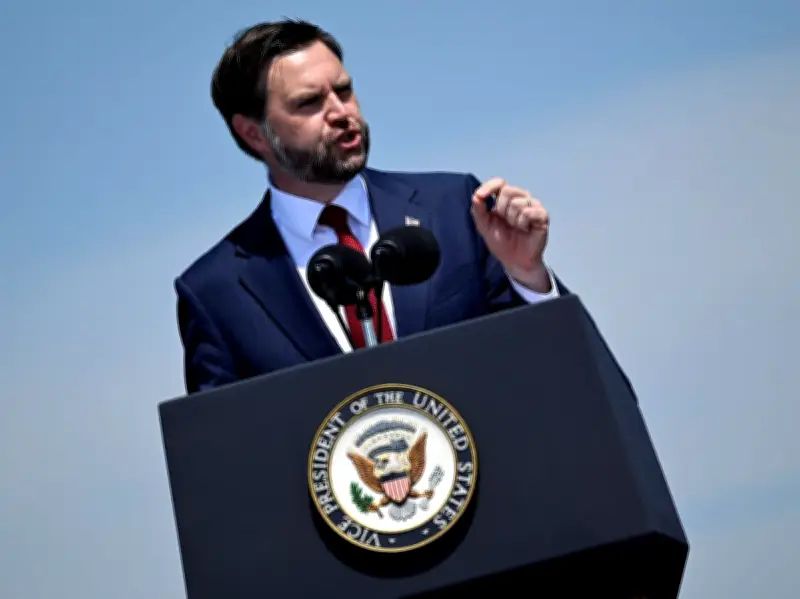
In a recent interview, Vice President JD Vance explicitly rejected the free-market principles of Nobel laureate Milton Friedman, aligning with a bipartisan trend away from economic liberty. Speaking to The Daily Wire's Michael Knowles on June 30, Vance argued that the Republican Party is now embracing a Hamiltonian, developmentalist approach where government manipulates the economy as a tool.
Vance claimed that President Donald Trump's proposal to seize equity in AI companies faced little opposition, a statement free-market advocates dispute. However, he correctly noted that such voices are dwindling within the GOP. "American economic policy on the right is now much more Alexander Hamilton than it is Milton Friedman. I think that’s obviously a good thing," Vance said.
The Shift from Friedman to Hamilton
Vance's comments reflect a broader transformation in Republican economic thinking. He described the new approach as "American developmentalist," where government actively shapes the economy. "I do think that fundamentally that Hamiltonian tradition is going to be what we see on the American right and will dominate American conservative economic thinking for the future," he added.

This marks a departure from Friedman's legacy, who advocated for free markets as essential to individual freedom. Friedman once told PBS, "The only way that has ever been discovered to have a lot of people co-operate together voluntarily is through the free market, and that’s why it’s so essential to preserving individual freedom." He believed free markets undermine political centralization and control.
Vance's Post-Liberal Vision
Vance, a self-identified "post-liberal," rejects classical liberalism's core values, including individualism and free markets. He argued that Friedman's ideas made sense in the 1980s because of "rich and powerful institutional Christianity" that provided guardrails. "Being laissez-faire in a world where there are Christian guardrails on everything is a much different proposition than being laissez-faire in a world where globalized liberalism has become the sort of status quo of American elites," Vance said.
Friedman, who was Jewish, supported freedom for all regardless of religion. His views contrast sharply with Vance's call for "Christian guardrails" on economic freedom and his laughter at the idea of government seizing equity in companies.
Bipartisan Consensus Against Free Markets
Vance's stance echoes that of former Democratic President Joe Biden, who also criticized Friedman's ideas. This bipartisan rejection of economic freedom signals a significant shift in U.S. politics, where both major parties now favor government intervention over free markets. The trend raises questions about the future of prosperity and individual liberty in America.