

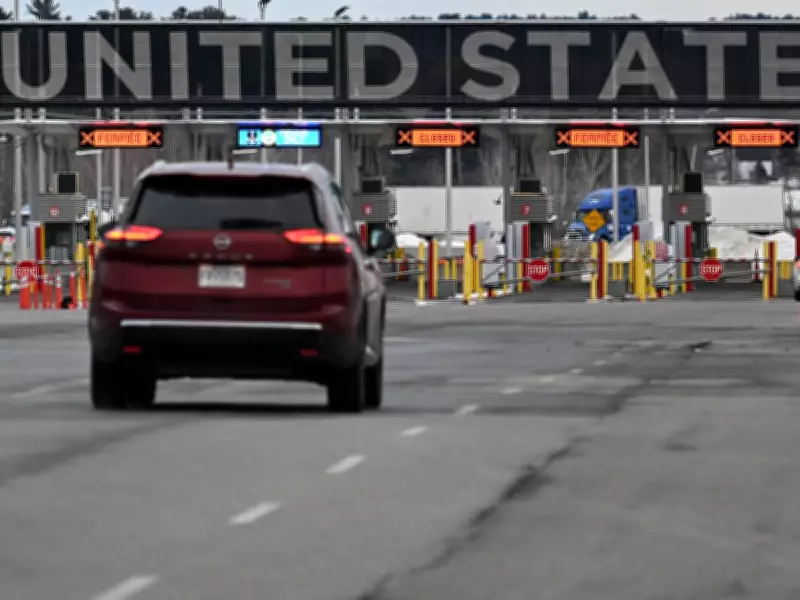
Donald Trump's trade policies have inadvertently given a significant boost to Canada's tourism industry, according to a new study by Desjardins Group. In 2025, political tensions between the United States and Canada led many Canadians to choose domestic destinations over cross-border trips, reshaping tourism trends dramatically.
Sharp Decline in Cross-Border Travel
Canadian travel to the United States plummeted by 25% in 2025, representing 10 million fewer trips across the border. This trend has continued into 2026, with trips south of the border down 18% in the first two months compared to the same period in 2025, and down 28% from 2024 levels.
Domestic Tourism Surge
Desjardins senior economist Kari Norman noted that the decline in cross-border travel was offset by a surge in domestic tourism. Spending on domestic travel rose 10% in the first three quarters of 2025, as Canadians made nearly 6 million more day trips and 2.6 million more overnight stays within Canada. They also extended their stays and spent more on domestic trips compared to the previous year.

“What made the 2025 story particularly encouraging for domestic operators was that much of the spending diverted from cross-border travel stayed in Canada,” Norman said.
Economic Impact
The shift in travel patterns has provided a meaningful boost to Canada's economy. Tourism employment grew by 3% in 2025, more than double the 1.4% increase across the overall economy. Total tourism employment has risen by over 30,000 jobs since 2019, now accounting for nearly 3% of all jobs in Canada.
Increased Overseas and Inbound Travel
Not all the travel diverted from the U.S. remained in Canada. Canadians took approximately 700,000 more trips overseas during this period, with destinations extending beyond traditional favorites like Mexico and the Caribbean to include more distant locations in Europe and Asia. Meanwhile, foreign visitors are also coming to Canada in greater numbers. Trips by U.S. residents to Canada rose nearly 3% in the first two months of 2026, with a similar increase in overseas visitors.
Continued Pro-Canada Sentiment
As the peak tourism season approaches, Desjardins expects the pro-Canada sentiment driving these travel trends to persist. A recent Leger poll cited by Desjardins found that 70% of Canadians are less likely to travel to the U.S., with the top four reasons all tied to tensions with the United States, including feelings of being unsafe or unwelcome. The poll also revealed that 67% of Canadians intend to travel within Canada this spring, a share that has risen sharply from recent years.
Potential Risks and Mitigating Factors
Norman highlighted potential risks on the horizon, including higher fuel costs stemming from the Iran war and upcoming negotiations over the Canada-U.S.-Mexico Agreement. However, fuel costs may actually reinforce the trend by encouraging more domestic road trips, especially since Ottawa has suspended the fuel excise tax until Labour Day.
“In 2025, tourism trends were defined less by where Canadians chose to go than by where they chose not to go,” Norman concluded.






